
Documentarian Ashley Duong didn’t set out to create a form-breaking project, but the story couldn’t be told any other way.
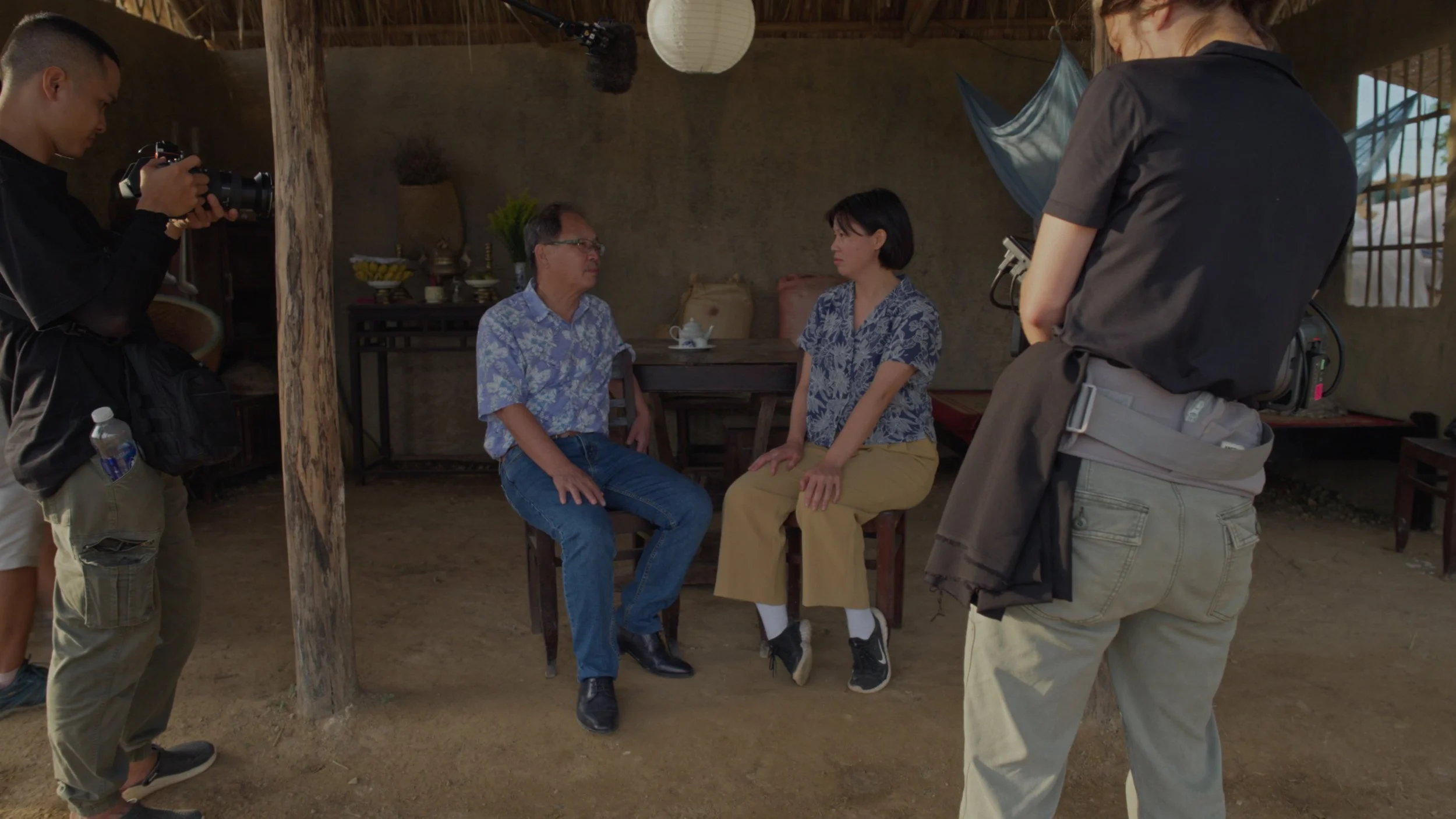
A still from Ba’s Book. (Photo: Courtesy Reel Asian).
Growing up, documentarian Ashley Duong didn’t talk to her father, Anh, about his past. She knew the outlines—he was born in Vietnam but fled during the war and settled in Canada—but Anh was always hesitant to answer Duong’s questions. It wasn’t until Duong was grown up and travelled to Vietnam herself that Anh wrote a series of letters addressed to her recounting his youth. These letters were revelatory for Duong, who also learned for the first time that her father had spent over five years in revolutionary Tehran before immigrating to Canada. The letters were eventually published as a coming-of-age memoir called “Dear Da-Lê.”
Her father’s book was the skeleton key for Duong, who knew she had to turn her father’s story into a film. But she also needed to involve all the other characters: her relatives in Vietnam whom Anh had left behind. “I wanted to do something with my family and I wanted to use this opportunity of making a film as a way to connect our family together,” Duong tells RepresentASIAN Project.
Immediately, Duong ran into trouble. Her father was hesitant to participate and while she first tried a more traditional documentary strategy (interviewing the subjects on camera), her family in Vietnam fell silent when the topic of the war came up. So, Duong tried a different approach: she recruited her cousins to re-create scenes from her father’s memoir that recounted his childhood. Almost instantly, Duong’s relatives had notes and began telling Duong exactly how they remembered certain moments. She knew from then on that telling the story of her father and his family would also mean telling the story of her own journey to make the film and connect with her relatives.
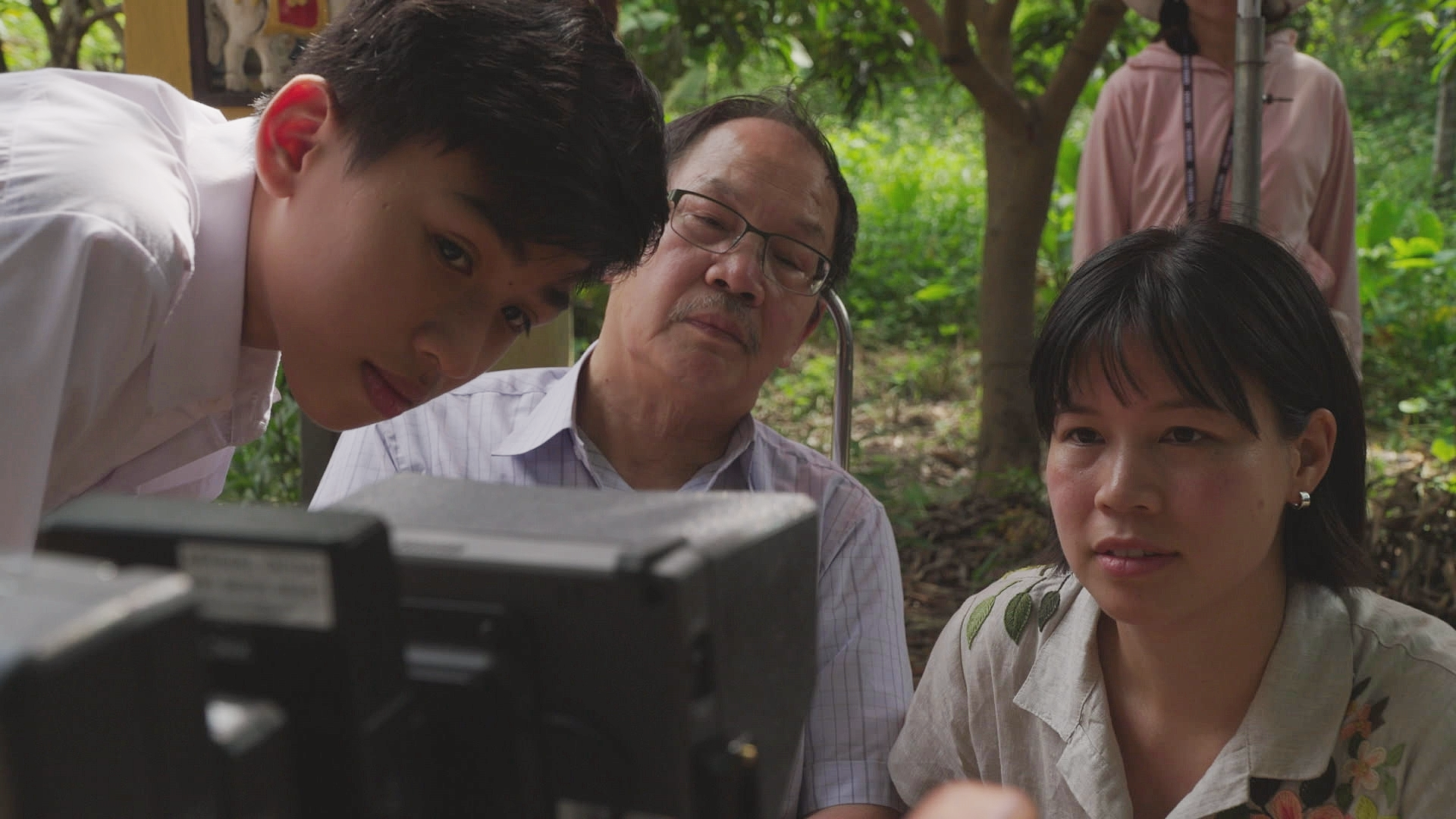
A child actor, Anh and Duong watch a re-created scene play out on screen. (Photo courtesy Reel Asian).
Duong set out to cast local child actors—some of them her own little cousins—to play the parts of her aunts, uncles and grandparents. She also cast Vietnamese Canadian actor Duy Nguyen to play the younger version of her father. Montreal-based Nguyen, who had just wrapped up his role as Man on HBO’s The Sympathizer, says that he found Duong’s casting call on Facebook and knew right away he wanted to be a part of the project. “I wanted to tell more Vietnamese stories,” he says. “I knew I could help. I know the language, I am from Vietnam, I could help build this bridge.”
Nguyen ended up being more than just a cipher for Anh. As the only trained actor on set, he helped Duong when it came to working with performers, something she’d never done as a documentarian. He also brought much of his own lived experience to the project. Originally from Hanoi, Nguyen says that he was shocked at how much Anh’s story resonated with him. “He left home not because of the war, but because he had this ambition and that he needed to find himself and be someone,” Nguyen says about Anh. “That’s also why I left Vietnam to go to Canada. But that loneliness you feel when you’re cut off from your family is something I understand and I didn’t expect to find through this story.”
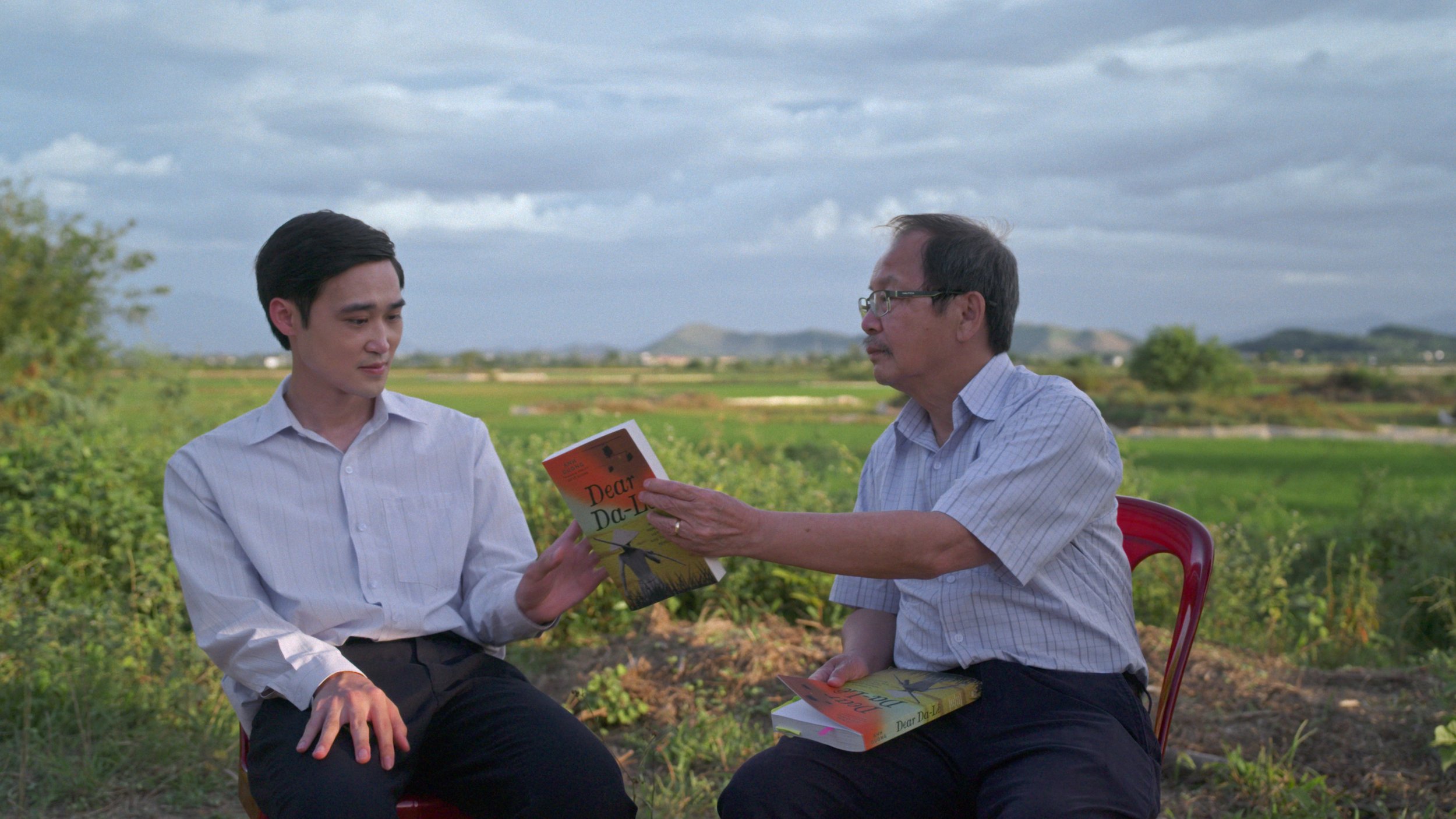
Nguyen (left) being given Anh’s (right) book in preparation for his role. (Photo courtesy Reel Asian).
Turning herself into a subject was a first for Duong, who had never been on screen before. She explains that she found herself fixating on where the cameras were placed and trying to watch what was going on behind the lens. But she ended up learning so much about her family by participating, rather than sticking behind the camera. “I learned that I was so much like my father,” she says. “I thought he was such a different kind of person and I realized how much I also struggle with being vulnerable and that I have many of the same defense mechanisms.”
Nguyen also says that he watched, in real time, the way that Duong’s family began to open up during this process. One night, he explains, they were filming a scene where the family had to run away to flee a bombing. Between takes, Anh started to ask his family if they were cold during that time and what the experience was like. It was clear to Nguyen that the relatives had never talked about that time with one another. “In that moment, both sides of Ashley’s family saw each other for the first time,” Nguyen says.
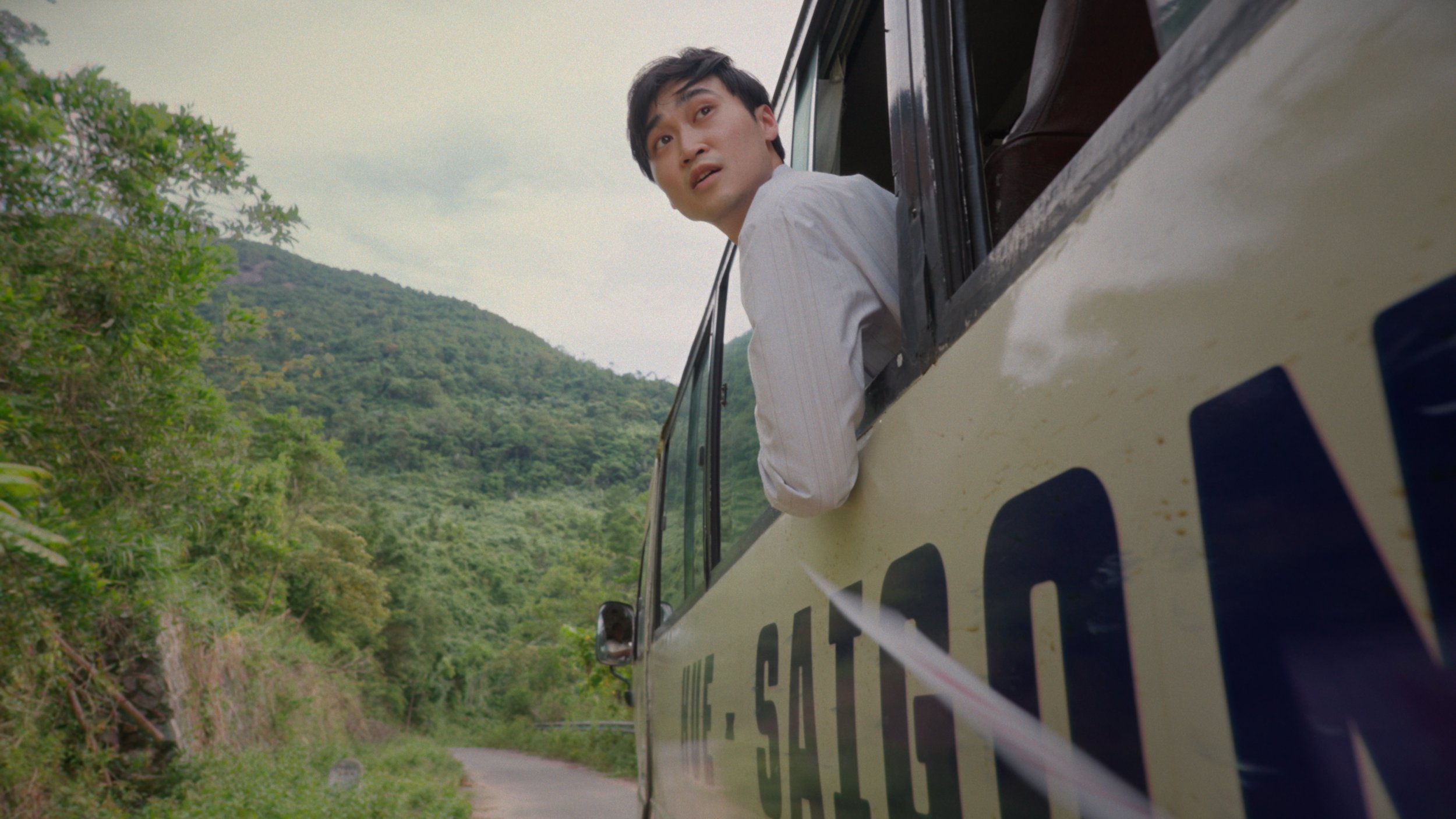
Nguyen as Anh Duong in Ba’s Book. (Photo courtesy Reel Asian).
The film ends up telling multiple stories in its mission to depict Anh’s story. There’s what’s on the surface: Anh’s childhood, his experience of the war, his leaving to study in Iran, then there’s the experience Duong’s family goes through in getting the film made, their reactions and reflections on watching the re-creations. Finally, there’s Duong’s own journey working with her father, Nguyen and her family, and the conflict and magic that goes into it. What emerges is a complex look at the relationship between creativity, storytelling, lived experience and what we owe to those who brought us up. Much of the documentary looks at Duong’s own inner conflict about paying proper homage to her father and telling his story correctly—sometimes at a practical price, like when her father pointed out that a scene she was shooting as one day had actually happened over two.
Ba’s Book isn’t just a testimony to Anh’s story and life—though it definitely is a monument to an extraordinary life. It also asks what the children of immigrants and those living in the diaspora owe to our families when we tell their stories, how we can tell them ethically and what telling those stories reveals about ourselves and our perspectives.
Ba’s Book is screening as part of the 2026 Reel Asian Film Festival, which is running November 11-21. You can get tickets to Reel Asian here. RepresentASIAN Project is a proud media sponsor of the festival.