
‘Ghost School’ Tells the Scary Story of Political Corruption and Women’s Education
“It was so apparent, in plain sight, yet no one wanted to do anything about it and nobody wanted to even acknowledge the problem,” says director Seemab Gu.
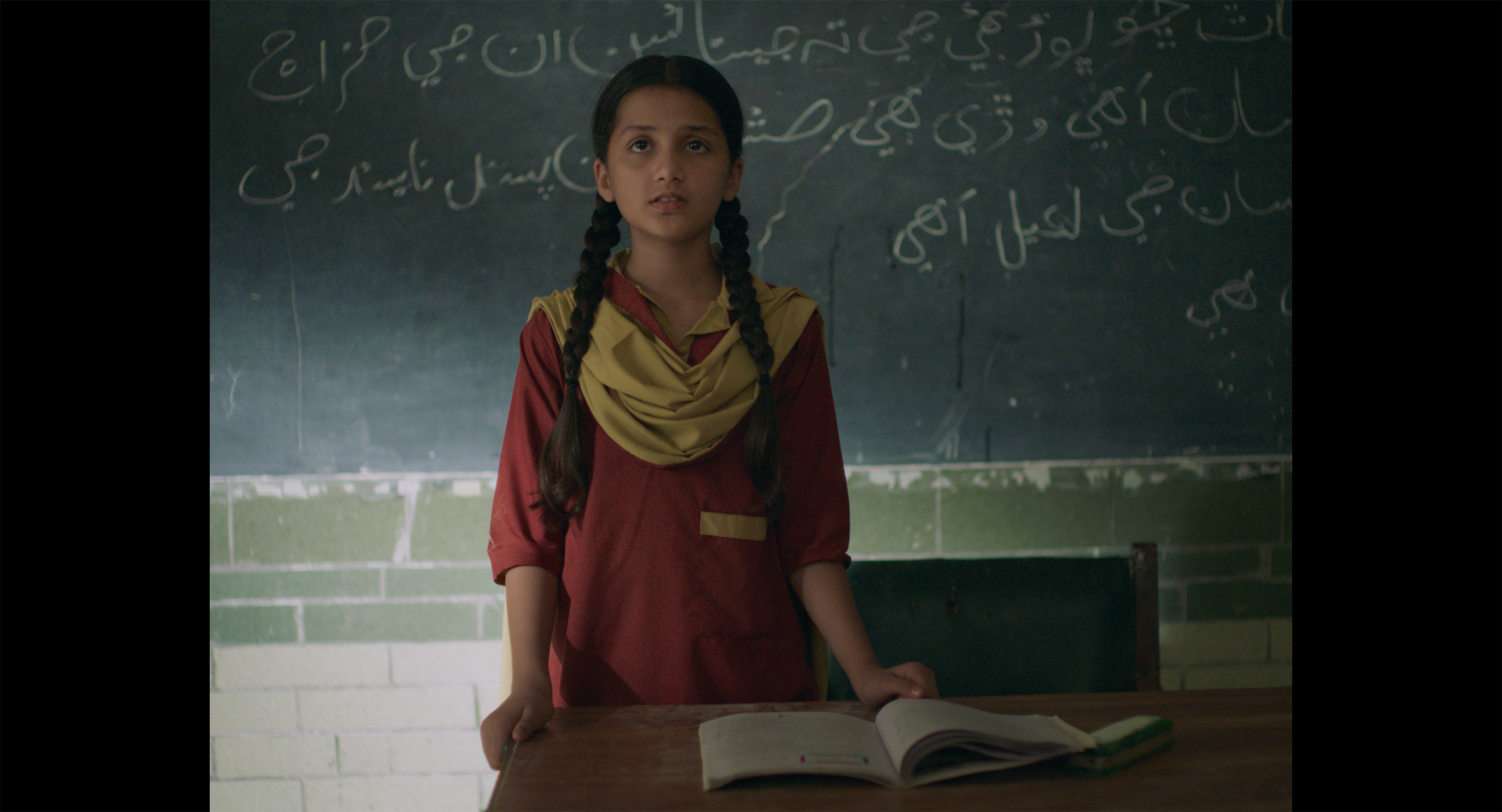
Nazualiya Arsalan as Rabia in Ghost School. Photo: Cinelava/Red Balloon Film.
In Pakistan, schools disappear in the middle of the night. No, this isn’t the beginning of a spooky story — it’s a real occurrence that happens all the time, especially in rural areas. According to the Asian Human Rights Commission, there were over 5200 “ghost schools” in Pakistan as of 2015. These are schools that exist on paper but aren’t actually there, leaving millions of children without education.
Seemab Gul, a British Pakistani filmmaker, was drawn to ghost schools when she first learned about the phenomenon and the way that it leaves young women in particular behind. “The female literacy rate in Pakistan is 50 per cent in the modern day,” Gul says. “It’s shocking; both my grandmothers never had the chance to go to school and could not read or write.”
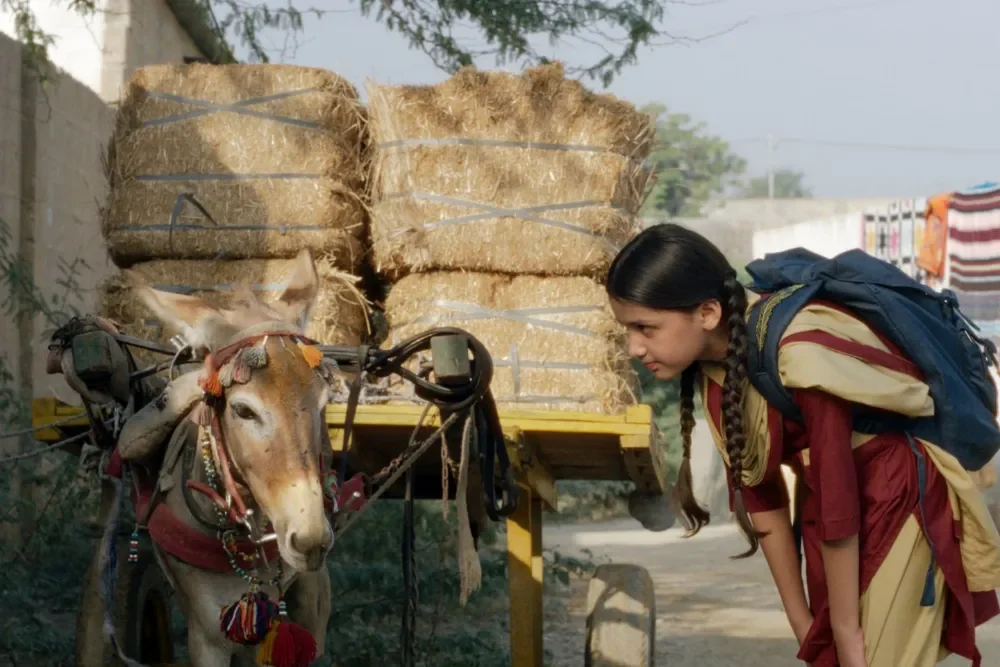
Nazualiya Arsalan as Rabia in Ghost School. Photo: Cinelava/Red Balloon Film.
Ghost School, which had its world premiere at the Toronto International Film Festival earlier this fall, follows a 10-year-old girl named Rabia (Nazualiya Arsalan), who sets out to discover the real reason why her local school has shut down. On her adventures around the village, she hears about political corruption, encounters rumours that the sole school teacher has been possessed by a jinn (a spirit from Islamic folklore) and learns about the unfair ways that her male peers will be able to pursue education in the city or a neighbouring village.
The idea for the film came to Gul in 2022, when she was covering the Pakistani floods as a documentarian with Greenpeace International. It was then that she came across ghost schools, ghost cottages and even ghost hospitals. “It was so apparent, in plain sight, yet no one wanted to do anything about it and nobody wanted to even acknowledge the problem,” she says.
She was also inspired by the privilege that she’s had. Gul grew up between Karachi and London, but says she “feels like a foreigner in both countries.” And unlike girls like Rabia, Gul was able to go to school and use the tools of filmmaking to tell “wonderful stories from my heritage and explore stories from a world that’s not really internationally visible,” she says.
Ghost School’s plot mirrored Gul’s own research into the phenomenon. “The path of Rabia, how she goes around finding out what is what, is similar to how I went around asking people about ghost schools,” she explains. Like Rabia, Gul experienced the twists and turns and bureaucratic knots and lies as she went hunting for the truth.
Rabia’s childhood innocence means that the corruption is confusing and hard to parse out. Gul says this was the intention: to show how different adult influences further confuse her and lie to her (sometimes on purpose and sometimes because they themselves don't know and rely on superstition). As Rabia goes through the village and talks to more of her neighbours, the audience sees the impacts of illiteracy: she helps her mom read letters, for example.
The film also follows Rabia as doors close on her and opportunities slip past her. While one of her male classmates tells her that he’ll be attending school in a different town — something that he’s very privileged to do as a boy and as someone from a family with more money than Rabia’s — she starts to look into how she can also go to a different school or get married, like some of the other girls her age in the village, which she really doesn’t want to do.
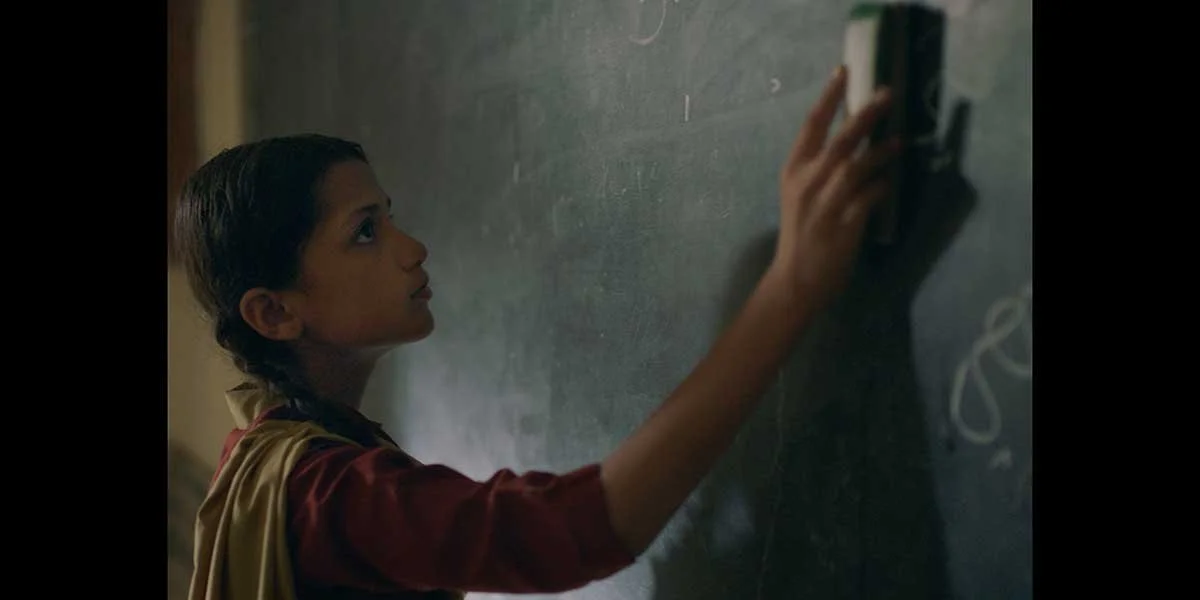
Nazualiya Arsalan as Rabia in Ghost School. Photo: Cinelava/Red Balloon Film.
Gul employs elements of magical realism in the film as well — while ghost schools are a very real phenomenon, parts of Rabia’s adventure feel larger than life. “From my perspective, Rabia uses her imagination to elevate herself out of this impossible situation,” Gul explains. “For millions of girls, there’s no hope. I wanted to create a hopeful ending. That’s the power of filmmaking.”
Ghost School has since been acquired by sales and marketing agency MPM Premium, which will hopefully mean that more audiences will learn about the fight for education in Pakistan. Gul herself hopes that audiences are entertained and educated, and that Ghost School “sparks conversations around ghost schools, responsibility, accountability and change.”