
A Way Back to the Home They Know: How SEADRA Could Reunite Families
With pathways to return to the U.S. and more, the bill offers hope for those who have been deported and their families — if it passes.
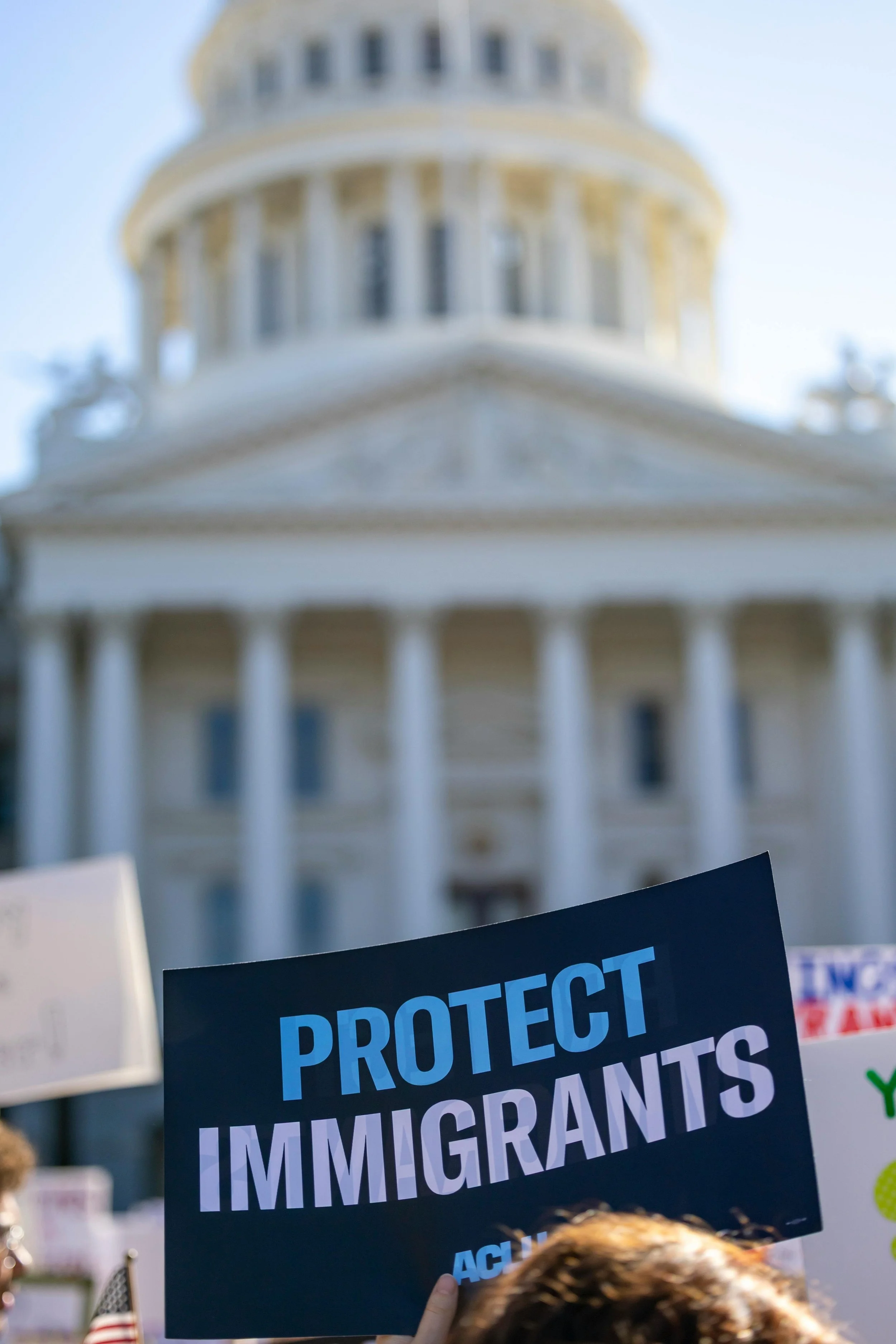
Sign reading 'Protect Immigrants' seen at a protest in front of the California State Capitol in Sacramento. Photo: Stephen Leonardi/Pexels.
On February 26, the Southeast Asian Deportation Relief Act, commonly known as SEADRA, was reintroduced in the U.S. House of Representatives. The bill aims to protect Southeast Asian refugees from Cambodia, Laos and Vietnam who arrived in the U.S. prior to 2008 from detention and deportation.
U.S. President Donald Trump proudly called his administration’s maximalist immigration policy the “largest deportation program in American history” multiple times while campaigning. Indeed, the number of Southeast Asian Americans deported between January and October 2025 was higher than under any previous administration — with 46 individuals sent to Cambodia, 175 to Laos, and 676 to Vietnam.
According to the Southeast Asia Resource Action Centre (SEARAC), Southeast Asian Americans are three times more likely to be deported due to a prior conviction than other immigrant communities. Since 1998, over 17,000 of them have received orders of removal to Cambodia, Laos and Vietnam.
Quyen Dinh, executive director of SEARAC, says over 80 per cent of the people with removal orders are being deported for crimes from their youth and while living in poverty.
The history between Vietnam, Cambodia and Laos, and the U.S. presents a unique circumstance. After the fall of Saigon in 1975, more than 1.2 million refugees from this region settled in America, becoming the country’s largest refugee diaspora. While still reeling from the trauma of war and displacement, most settled into communities with no resources or support systems. As a result, some youth were swept into cycles of violence and were incarcerated. These are the convictions many Southeast Asians still face double punishment – prison and deportation.
Southeast Asian Americans are three times more likely to be deported due to a prior conviction than other immigrant communities. — SEARAC
Under previous law, past convictions deemed "aggravated felonies” made immigrants eligible for deportation. This included serious crimes like murder, rape and financial fraud, along with lower-level crimes, like theft, drug possession, domestic violence and driving under the influence.
Once an individual is convicted, they serve their sentence and have their green card taken, an order of removal is issued. Until the order is accepted by the country they are being deported to, they must check-in with Immigration and Customs Enforcement (ICE) every year. It is at these check-ins that they discover the status of their deportation. If their deportation order hasn’t been accepted, they are released after this annual check-in. As Dinh notes, what makes matters more devastating is that, oftentimes, between check-ins, these folks have begun growing their families. Then, if they’re to be deported, they’re likely to leave their families behind.
“For the 15,000 individuals who have deportation orders, we know that they’re living their lives and spirit in limbo,” says Dinh.
Prior to Trump’s second term in office, this process allowed those with an order of removal a chance at staying in the U.S.
A darker layer: Some people are being deported to third countries — places that they’ve never been to and have no ties to. For those facing deportation, “detention itself is worse than hell and the threat of being detained and then being deported to a third country is one that they cannot endure,” says Dinh. “We know that folks are afraid to drive, they're afraid to travel. ICE is picking up individuals for detention while [they’re] just driving to get their groceries for the day, and they don't know if that will be the last time they ever see their family.”
Whether an individual is deported to a third country depends on an assessment of how well they’ll fare, which includes whether they have family in the country.
Dinh also says the number of deportations being accepted by third countries have risen since January 2025 amidst threat of economic sanctions, tariffs and travel bans from the U.S. Vietnam, for example, agreed to process deportation requests in 30 days after tariff threats and has also agreed to accept some pre-1995 refugees who were previously protected from removal. Laos has been under pressure to do the same after the recent travel ban, while Cambodia has continued to accept more deportees following the visa sanctions in 2017 during Trump’s first term.
“We know that folks are afraid to drive, they’re afraid to travel. ICE is picking up individuals for detention while [they’re] just driving to get their groceries for the day, and they don’t know if that will be the last time they ever see their family.”
“We see these deportations as a betrayal of U.S. duty to refugees,” Dinh said in 2025 to The Guardian. “When you accept a refugee, you don’t accept them for just three to five years, you accept them for their entire lifetime.”
According to her, countless family members of deportees have reached out to SEARAC for support after their loved ones were sent to a country they’ve never lived in or were last in as children. The “trauma and destabilization" they experience while grappling with their new lives in strange places is considerable, she’s found.
Which is why SEADRA has been reintroduced by congresswomen Ayanna Pressley, Judy Chu, Pramila Jayapal and Zoe Lofgren. The goal is to end the deportation of Southeast Asian American refugees, provide protections for those living under final orders of removal and create new options for the many refugees who have already been deported.
According to their press release, the bill aims to also:
Limit the authority of the Department of Homeland Security to detain or deport Southeast Asian refugees who arrived in the U.S. before 2008
Permanently authorize eligibility for Southeast Asians with a final order of removal with a five-year renewal period
End in-person ICE check-ins and establish five-year intervals between virtual check-ins for Southeast Asians on orders of supervision
Create a pathway for Southeast Asian refugees who have already been deported to return to the U.S. and fight their removal orders
“These [deported refugees] came to this country fleeing persecution and violence, and have since grown deep roots in their communities,” Chu said in a statement. “My Southeast Asian Deportation Relief Act (SEADRA) would provide immigration relief that is based on common sense, not cruelty.”
“SEADRA continues to build optimism in our team advocacy efforts and the power of our community to be our own solutions,” Dinh said.
For all those who are at risk of losing the lives and homes they’ve created in a country that promised them a safe future, SEADRA can be their way back. More than a way back to America, it promises a better way of check-ins that impact people’s lives along with a chance at fighting their removal orders and protecting those who entered the U.S. before 2008. SEADRA is hope for the entire community.