Julie Won on Han, Housing and Why She’s Running for Congress
A conversation with the NYC Council Member and Congressional candidate on AAPI hate, the caregiving crisis, and why a hug from her kids makes the whole impossible job worthwhile.
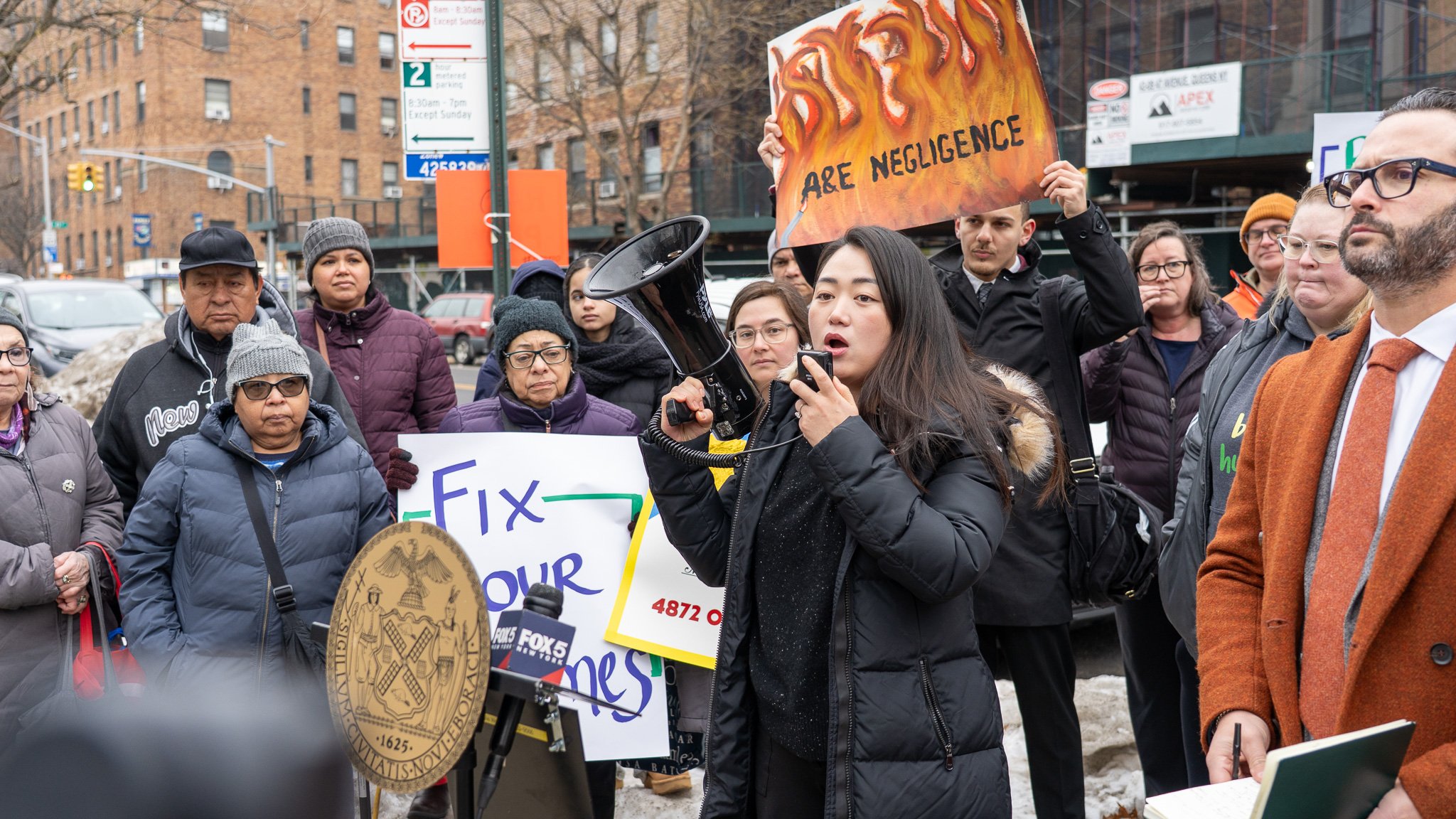
NYC councilwoman Julie Won. (Courtesy Photo).
Julie Won didn’t intend to become a politician.
Prior to becoming the first woman and immigrant elected to represent Long Island City, Astoria, Sunnyside and Woodside in Queens,, the 35-year-old councilwoman was a management consultant and a career in politics wasn’t on her radar.
“It was never on my list of to-do’s in my life as an Asian American immigrant [to run for office], and I also never thought that someone like me could be elected in American politics either,” she says.
It wasn’t until the COVID-19 pandemic, when anti-Asian hate was rampant, that Won decided to embark on a new career to make a change.
“Seeing that amount of violence and just feeling so helpless that nobody was speaking up for us…I was feeling incredibly unsafe in my own country.”
Within six months of winning a crowded 16-person race with no backing from any party or establishment organization, Won had secured free internet and cable TV for all public housing residents in her district. Three years later, the program had gone citywide. Now, Won is in the middle of her fourth election — this time running for Congress — and she’s treating the campaign the way she treats most things: as a sprint and a marathon happening at the same time.
We talked to Won about her origin story, but also about everything underneath it: the Korean concept of han (the economics of caring for two generations at once), the racism she faces in office, what solidarity actually looks like on the ground and what keeps her going when the days are this hard.
On leaving corporate life to run for office
You worked in corporate before. What made you want to make the switch into politics?
It wasn't until COVID-19, during the pandemic, when there were two things happening simultaneously. One, the amount of AAPI hate, where people were calling it the "Kung Flu", and there was an immense amount of physical violence. I saw an elderly Filipino American man on the subway get slashed open in a very busy train car, and nobody got up to help him even when he was bleeding out. Or another Asian man on the F train, who was pushed onto the tracks for being Asian American.
I was seeing that amount of violence and the lack of representation, and I was just feeling so helpless that nobody was speaking up for us. Instead, the New York Times was using a photo of Flushing [one of New York’s Chinatowns] on their front page for COVID-19 coverage, even though Flushing had nothing to do with the first outbreak. They were just using photos of us to turn us into scapegoats.
I was feeling incredibly unsafe in my own country.
And then, simultaneously, professionally, I got a call from my managing director who said, "Julie, travel's frozen. We're going to sit tight and figure out what our clients want. Until then, just relax." I used to travel 90 per cent of the time, Monday through Thursday. Suddenly I had all this free time.
I grew up on public school free lunch. When schools closed and the former mayor said, "If you receive public school free lunch, come pick it up," I had a flashback to myself as a kid. My brother and I would sit at home on federal holidays with no childcare and go hungry, because no kid is walking a mile and a half to school by themselves to pick up food.
So I started doing meal deliveries. That's when I met a little girl named Natalie who showed me how she did school from a LinkNYC bus stop, using the free Wi-Fi hotspot. She never turned on her microphone and never went on camera, because she never wanted her classmates to know how poor she was.
That just broke me inside. But those two things pushed me over the edge to try to make a long-lasting change and run for office.
On care and the sandwich generation
Your platform talks a lot about "a lifetime of care." What does care mean to you, and how has that idea evolved since you immigrated from South Korea?
The word "care" can feel very abstract. But as a living human being, somebody cares for you, and you care for others. When we talk about a lifetime of care, it's rooted in my current life as part of the sandwich generation.
My parents are aging. My dad is in his 70s. They don't have health insurance, life insurance or a 401k. My existence, them giving birth to me… I am the retirement fund. And similarly, I have a two-year-old and a four-year-old. They are helpless without me and my husband.
We're being squeezed by the cost of living in New York City and caring for aging parents at the same time. I have to pay two rents, two sets of food, two cars. Paying for just my kids’ daycare and aftercare from nine to six costs me over $4,000 a month. And that's only care during the hours I'm working.
The average rent in Long Island City, where I represent, is $6000 - $8000 a month on the waterfront. So rent, plus $4000 for childcare, plus my parents' rent. I'd need to be making close to a million dollars to not live paycheck to paycheck. Even if you make $500,000 a year, it's not enough.
“My parents are aging. My dad is in his 70s. They don’t have health insurance, life insurance or a 401k. My existence, them giving birth to me… I am the retirement fund. ”
Can you tell me about how you saw care growing up, from your parents or the people around you?
Most immigrant and multigenerational families can relate to this: there are no boundaries. People talk about self-care and boundaries now, and I'm like, what is that? My dad is one of nine brothers and one sister, so I have 20 cousins, 20 aunts and uncles, and everyone was everywhere all the time. Your money was my money. Your food was my food. We were all sharing everything to get by.
At some point in your life, you're going to need care. Whether that's a chronic illness, a workplace injury, or in my case, two C-sections in a row and a miscarriage. My body was shot, pelvis down, and I had to recover while also taking care of a toddler, my parents, and a newborn. There's no way to physically do all of that without someone caring for you, like a home care worker.
I had a Korean doula who did everything. Cooked for me, took care of the baby, made sure I was eating, did the grocery shopping, helped me clean. Plus my mom helped. That's the amount of caregiving I needed just to heal back together after my body was cut in half twice.
But that's not the reality for most people and it's not covered by insurance. In New York City, you have to make under $31,000 a year as a family to qualify for Medicaid, which gets you home care. That means you basically can't work a minimum wage job and also receive care. So families have to decide: do I not work so I can heal, or do I work and have no income left over anyway? It's a completely flawed system.
On solidarity across communities
There's a lot of conversation right now about solidarity within the Asian diaspora, and between different communities. How do you think we can build that, especially when so much of society wants to pit us against each other?
Over the last four years, whether it was Black Lives Matter, Free Palestine or the ICE arrests happening right now, I think New Yorkers, and most people honestly, whether you're in Canada or the U.S., intrinsically have a conscience. Nobody told you to care about Black lives. We just showed up, marching in the thousands, shutting down the Brooklyn Bridge. Nobody told you to care about Palestinian civilians dying, or Israeli civilians who were kidnapped. You just can't be human and ignore those images.
With the ICE arrests right now, I see the same thing. In the last three months, we've run four trainings, one in each neighborhood I represent, and trained over 2,000 people on what to do if they see ICE. How to distract, delegate, document. How to identify an officer. How to get someone's full name, spelled out, their phone number, their asylum ID number, so we can organize a letter or phone campaign to get them freed.
We had a six-year-old Chinese boy, Yuan Xin, who was detained and separated from his father. People showed up immediately, protesting, demanding he be reunited with his family. Whether the person is Black, Latino, Asian, or white, people came together and said, this is not okay.
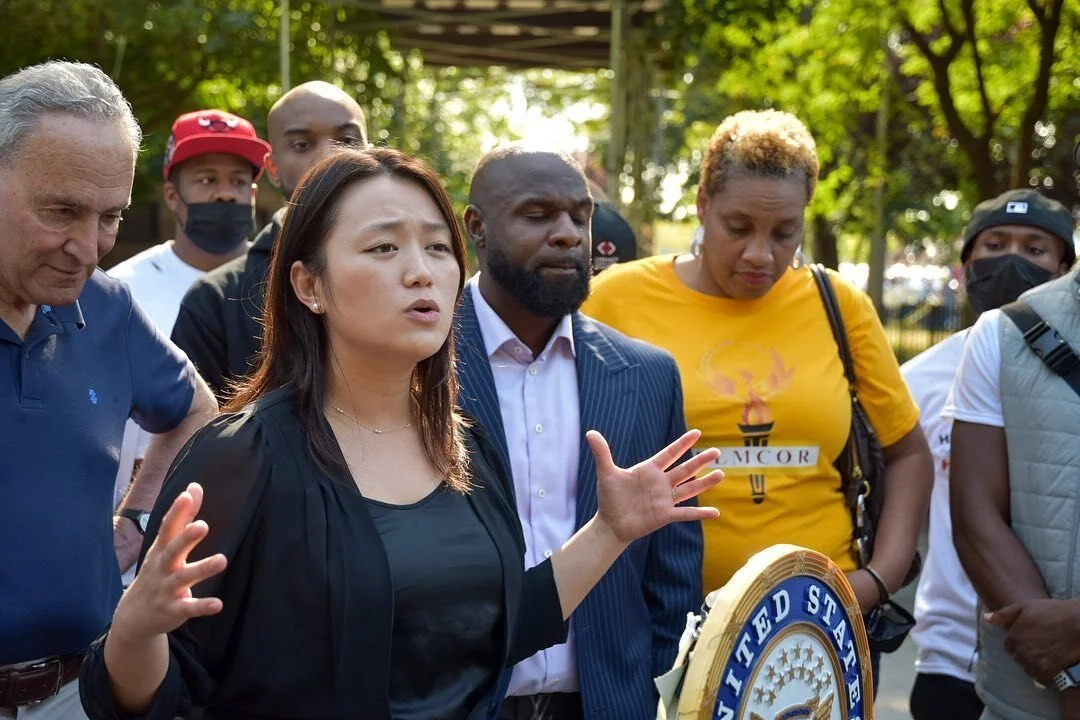
Do you think things are more divisive right now, or do you think the tide is shifting toward people coming together?
It really depends. You can't generalize for the whole country, the U.S. and Canada are huge, you're always going to have people with different views, that's part of democracy. But I can speak for my community: instead of allowing hatred to divide us, we choose to care for each other and overcome it with love.
We have weekly meetings putting together Know Your Rights cards in multiple languages, cutting them out by hand, going out to street corners where migrant day laborers wait for work. We give them a hot cup of coffee and a pastry and say, hey, we're here for you, do you know your rights, do you need legal services, do you have somewhere to stay?
We understand that we're intrinsically interconnected. The food on your table and the farmers who picked it. The people at your daycare or your parents' senior care, they may be immigrants or undocumented working low wages. Every part of the economy is connected. Whether you're a billionaire or working class, we're part of one fabric, and we can't exist without each other.
On being the first
You're the first woman and immigrant to represent this district in New York City's history. Being "the first" comes with a lot of pressure to represent. How have you navigated that?
I get a lot of "ching chong ching." I get "I'm going to shoot you between your chinky eyes." I've gotten a lot of death threats. At first I was shocked, you'd think in a city like New York people wouldn't be so overtly racist. But when you have a president who encourages racism and white supremacy, I guess I shouldn't be surprised.
For the most part, you need really thick skin. What I tell other women of color considering running for office is: before you run, you need a very clear sense of identity. Your identity can't depend on the title of being elected, it has to be rooted in who you are as a person. If somehow the whole government dissolved tomorrow, like in Bangladesh or South Korea, who would you be?
Until you know that, you shouldn't run because you won't survive. People will smear you and lie about you to the press, and the press will twist your words no matter how carefully you say them. But when you have a clear sense of identity and mission, that's when your community looks at the smear articles and says, well, from what I've seen of her actions, her legislation, her budget spending, it's clear she's here to fight for immigrants, for students, for our green spaces.
“The hardest part for any person of colour is the double standards.”
The hardest part for any person of colour is the double standards. I can't tell you how many times I've been asked when I graduated college, because people assume I just did. I say, no, ma'am, I have two kids, I'm a grown person. There's the model minority myth, the expectation that an Asian woman should be docile, quiet, soft-spoken. When you defy that, it's offensive to them, because that's not what they want you to be.
But that's why we need more representation. The AAPI community is vast. We speak over a hundred languages. We have Republican Asian Americans, Democratic Socialist Asian Americans, progressive Asian Americans, independents. We're a broad spectrum, just like any other community. There's no groupthink, no tribalism.
Did you always have that sense of identity, or did you grow up feeling like you had to be quiet, and find your voice later?
I was a feral child growing up. I had no childcare and I had to fend for myself. I've always had to speak up, especially because I was my family's translator. I'm the youngest, so I learned English fastest, even though I came here not knowing the ABCs. Every Saturday I was helping my mom fill out benefits forms, explaining my own report card to her and helping my uncle at doctor's appointments.
I had to grow up fast, and that meant I had to speak up. Even if my parents didn't fully understand they were being treated unjustly by an insurance company, I had to decide, as a fifteen-year-old, to tell that company something unfair, and I needed them to reconsider.
I think that's given me this inside rage. In Korean we call it han, where your blood just boils for generations of injustice. My grandmother told me since I was five what it was like to live under Japanese occupation. I think it's partly genetic, partly passed down.
But my clear sense of self really comes from my community and my family. Even growing up humbly, my parents always loved me and made sure I felt confident in who I was. If I ever got bullied for being Asian American, my mom would say, "who was it? Let's go talk to them." She made sure I knew I could stand up for myself and never let people bulldoze over me.
On how she takes care of herself
Given everything you're met with in this role, how do you care for yourself?
It's hard. My team will tell you I eat maybe once a day because I never have time. I don't really get days off. But I'm grateful, because my chiefs of staff know me so well.
My first chief of staff was Lorena Lucero, a Mexican American woman who is also a child of immigrants. Then Nicolota, who has the biggest heart for immigrants and people of color. Now my chief of staff is Fara Salam. They understand how strange this job really is. I have to re-interview for it every two years, and then thousands of people decide if I'm good enough or not—even if they don't actually know me and even if what they think about me or my husband isn't true.
Even my mom says, “I don't understand why you have to interview for this job every two years, and you barely get paid, and you have to spend money just to run. You could've stayed in tech, made a lot more money and had an easier life.”
But my chiefs of staff have always been intentional about understanding what I care about and why I'm here. Because if I didn't care, I wouldn't survive this. I'm used to working in short sprints, two or three month projects, professionally trained to be in and out. And they know how to keep me going.
I have a lot of gratitude for my team, because this isn't an easy industry. The pace, the low pay, the lack of benefits. But everyone, on the campaign side and in my government office, genuinely cares. And they care for me too. They'll clear my schedule and send me to serve food at a migrant shelter's welcome dinner, to recalibrate, so I can stay focused on the next legislation and the next budget fight.
On why she keeps going
Why is this work fulfilling enough to keep doing?
Even though I only get a few hours a week with my kids right now, when my two-year-old and four-year-old give me a big hug and a big smile, and I say "I love you," it makes it all worthwhile.
I was just in a briefing this week about how by the 2050s, all the Arctic glaciers will have melted. We talk about climate change constantly, all the animals going extinct. Even if you and I won't be alive to see it, my children are supposed to still be alive then. What kind of world are we leaving behind?
My dad never told me to go achieve something, that was my mom, the tiger mom, who encouraged me to be captain of every club and get an A on every test. My dad was more philosophical. He'd ask, okay, you went on this mission trip, you came back, what changed? What did you do that made their lives better? He trained me to think: whatever you touch, by the time you give it back, how have you improved it?
So that's what I focus on. That my children will have a better world by the time I'm gone, so my grandchildren and great-grandchildren still have something worth living for.
I also think about people like John Ortega, a 26-year-old who died by suicide in one of my district's migrant shelters, leaving behind his three kids and his widow. His final note said he'd come here on foot, through the Darién Gap, through the Amazon, and realized America was a sham. That he'd risked everything to get here and was treated no better than cattle.
That is extremely shameful. As a fellow immigrant, if my city and my country aren't doing justice by the people most desperate to survive, if they're treated the same or worse here than where they came from, then I haven't done my job. That's what I hope to do as a Congress member. I've shown my community I'm responsible, disciplined and that I get things done. If they give me more jurisdiction and the ability to make longer-lasting change, I’ll show them even more. I want to work on comprehensive immigration reform, so we never have a story like John Ortega's again.
On her record, and what comes next
What strategic investments have you made in the neighborhoods you represent, and how will that translate to Congress?
There are three things I'm most proud of. First, free internet and cable TV for all public housing residents citywide, which I first ran on, and we achieved it in six months for my district, then citywide over three years.
Second, housing. The migrant crisis and the housing crisis in New York City are extremely dire. At any given time, my district had 37 to 38 shelters, meaning 10,000 to 15,000 people were unhoused. I saw it as my responsibility to build housing that's affordable, one to one. In my first four years, I approved over 18,000 units of housing, more than the entire borough of Queens built in the last decade.
Third, money. I've brought over $2 billion in investment to my district. Over $10 million to upgrade existing schools, plus 6,000 new school seats so we never have a shortage. Millions more into public parks and green space.
I look at everything holistically, how every taxpayer dollar gets the largest impact, whether that's housing, schools, or matching investment to what my constituents tell us they need. If 7,000 people reach out and a chunk of them say the food pantry lines are too long, I add $100,000 to food pantry funding. We're evidence-based, data-driven. It’s not about which nonprofit leader is my friend. We're trying to make sure our community's voices are heard, whether that's through legislation — I've passed 13 bills — or through funding.
The conversation has been edited for length and clarity.
Julie Won is a member of the New York City Council representing Long Island City, Astoria, Sunnyside, and Woodside, and a candidate for U.S. Congress.