Hollywood Keeps Discovering South Asian Stars, But Then It Lets Them Go
Representation has improved, but power hasn’t. And for South Asian actors like The Pitt’s Supriya Ganesh, that gap is becoming impossible to ignore.
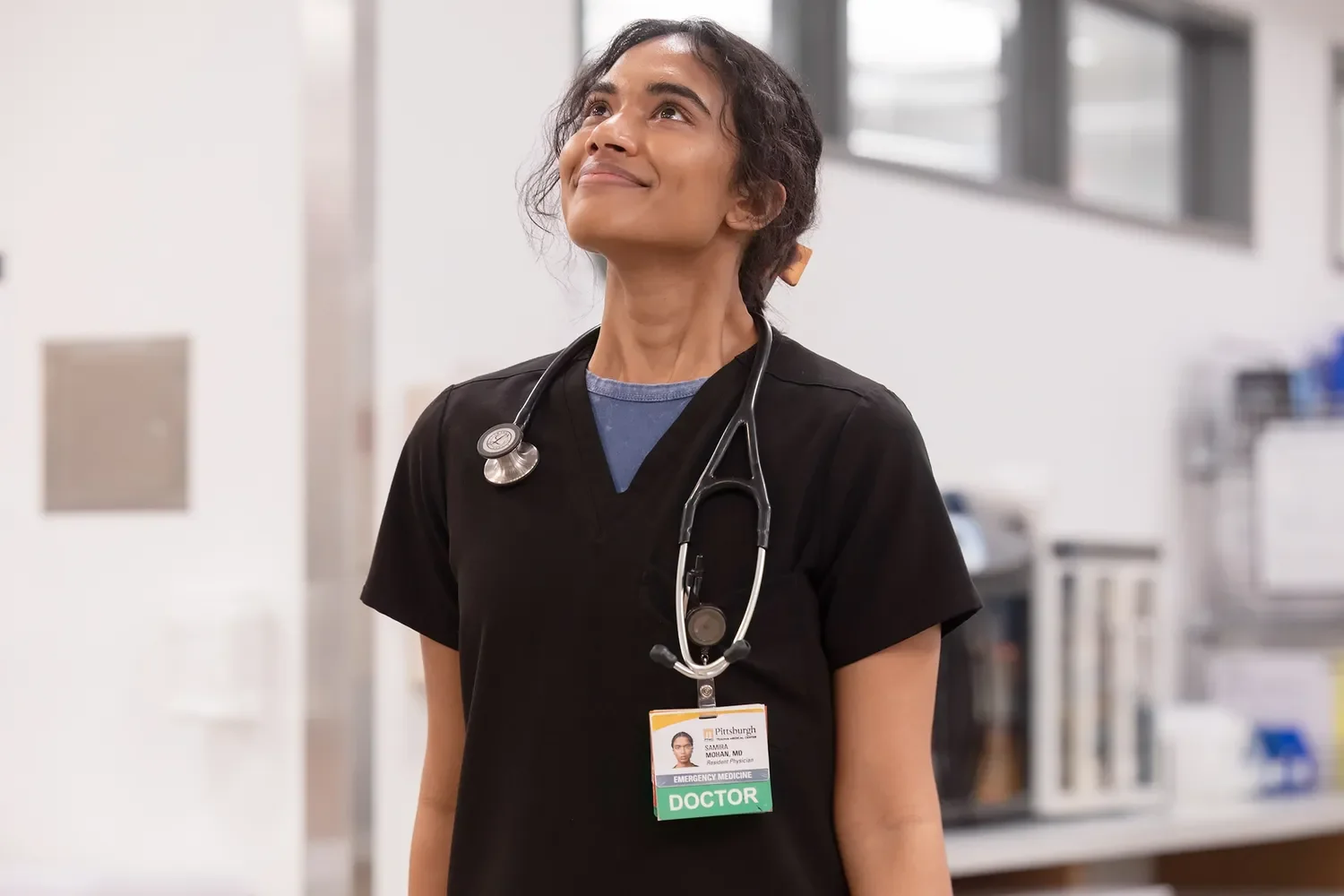
Supriya Ganesh on The Pitt. Photo: Warrick Page/MAX.
When news broke back in April that Supriya Ganesh would not be returning to The Pitt, the explanation sounded, on paper, reasonable enough. The uber-popular HBO Max medical drama is set in a teaching hospital where residents come and go; a revolving door is part of the realism.
In all the time since, Ganesh remained ambiguously silent on the decision. But last week, she finally addressed her exit in an L.A. Times piece, diplomatically pointing questions about the decision back to executive producer and star Noah Wyle and the series’ other producers, saying she was sad fans won’t get to see her character Dr. Samira Mohan any longer.
Mohan is the second character in as many seasons to leave the hospital between shifts, following Tracy Ifeachor’s Dr. Heather Collins. That, too, was a decision that went unexplained for months. While much has been said about The Pitt’s parasocial audience, it’s true that the show’s exits present a pattern. As fellow Pitt star Isa Briones also shared in that L.A. Times piece, seemingly as commentary on Ganesh’s exit, “The entertainment business constantly feels like a boys’ club that you cannot penetrate no matter what you do, because it’s still always going to be these older white men who are making all the decisions.”
The thing is, Mohan wasn’t just another doctor in the emergency room. She was one of the show’s most compelling characters: anxious and exacting while working hard to satisfy her parents’ expectations alongside her own goals. That was something I, as a 30-something Pakistani woman, felt intensely and rarely seen by. She was also the kind of South Asian character we still don’t see enough of on screen — not a punchline, not a girl-boss, not a flattened symbol of “diversity,” but a fully fleshed out character, and a dark-skinned Indian woman who also spoke Tamil. For a lot of viewers, that is the point of representation: not perfection, but a little texture.
But just as all that nuance arrived, Mohan became temporary. By the end of the second season, we saw her truly struggle with the emotional weight of working long hours in an emergency room, having a prolonged panic attack while on shift (only to be violently yelled at by her boss to suck it up; Robby, you jerk!), but also the very beginnings of a flirtation develop between her and Shawn Hatosy’s Dr. Jack Abbott (hot!).
All of this is what makes Ganesh’s departure sting beyond the boundaries of the show. The issue isn’t whether The Pitt can justify her exit narratively. I mean, it probably can; the actress is slated to have minimal screen-time in the first few episodes of Season 3 to close her character’s story out, which will see her choose a medical department that is not the ER, which she finds too demanding. The issue is that South Asian actors, and especially South Asian women, are so rarely positioned as essential that every departure lands with a slap in viewers’ faces. When there are only a handful of meaningful roles to begin with, “creative decisions” like these, as Ganesh put it, just feel like industry habit. Think of it this way: although The Pitt does have an overall diverse cast, the lead roles are all played by white actors, all of whom still have their jobs.
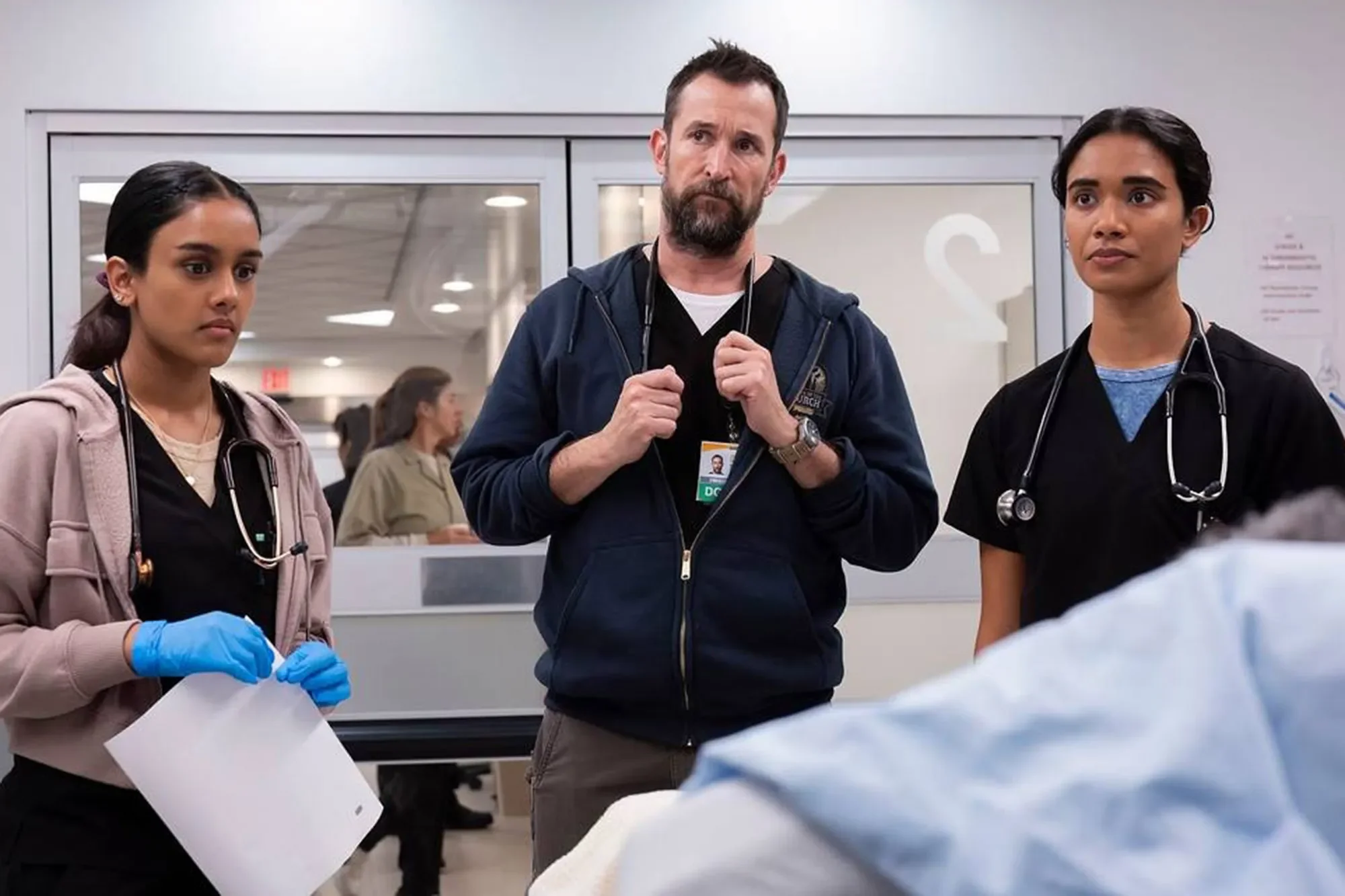
Shabana Azeez, Noah Wyle, Supriya Ganesh in 'The Pitt' season 1. Photo: Warrick Page/Max
And yes, coming in to fill Ganesh’s gap will be a Black actress, the great Ayesha Harris, who plays night shift doctor Parker Ellis and has been promoted to series regular for the upcoming season. But why does it have to be either/or? Why can’t we nix one of the white guys and keep both of these ladies? In the end, this casting swap just makes it feel as if women of colour are interchangeable. Needless to say, Ganesh’s news now has fans anxious that the same fate may befall co-star Shabana Azeez. It was announced this week that her character, Victoria Javadi, will no longer be in the ER in the new season as her rotation is over, but will now begin a psychiatry rotation. While that potentially means meatier work for the actress, seeing as how the show is all about life in the ER, it doesn’t bode well for yet another brown character.
'The Pitt' Star Shabana Azeez Reveals Her Character Will Not Be 'in the ER' for Season 3 https://t.co/wfkeoeUoxR
— People (@people) June 10, 2026
What’s toughest about this endless pattern of sidelining South Asians is that Hollywood loves to discover them. Remember when Dev Patel debuted in the extremely silly Slumdog Millionaire, and Americans and Brits behaved as though they had rediscovered yoga? He may be the only brown actor your white friends can name, but he still couldn’t sell Monkey Man and himself as an action lead to studios, so he produced, wrote and directed the film himself. (To massive box office success, earning more than triple its $10 million production budget.)
The fact is, Hollywood may know how to discover South Asian actors, but it doesn’t care to sustain them and build them into stars. A brown actor can be the face of progress for a season or a press tour, but that’s it. The lesson? Visibility is not the same as power, having a fanbase does not protect you, and being included is not the same as leading the way.
Like Patel, it’s telling that some of the most notable South Asian actors who have managed to move forward in Western film and television have done so by creating and producing their own work. Consider: Riz Ahmed created and stars in Bait, a Prime Video series about a British Pakistani actor whose James Bond audition detonates his life and public image (with the irony being a brown man would never get such an opportunity); Mindy Kaling didn’t wait for someone else to imagine an Indian American romantic comedy heroine — she wrote, executive produced and starred in The Mindy Project, then went on to co-create Never Have I Ever and a slate of other work; Aziz Ansari co-created Netflix sitcom Master of None; and Abdullah Saeed created Deli Boys, a Pakistani American crime comedy, which is a series of words I cannot believe I get to type.
“The fact is, Hollywood may know how to discover South Asian actors, but it doesn’t care to sustain them and build them into stars. ”
Even Simone Ashley, who should by any reasonable metric be one of Hollywood’s easiest yeses, has had to push toward authorship. Since Bridgerton, she can grace magazine covers and fashion campaigns, but remains an almost entirely mute character in The Devil Wears Prada 2, the summer blockbuster of the year. Fortunately, she’s started her own production company like all of the names above, through which she produced and starred in her own rom-com Picture This.
Of course, this is not to diminish the progress that has been made. There are more South Asian characters on screen now than there were 20 years ago. Shows like Never Have I Ever, Ms. Marvel, Deli Boys and Bridgerton have widened the frame. But widening the frame is not the same as handing over the lens. That distinction matters. Representation asks: Are we visible? Power asks: Who gets to stay? Who gets to grow? Who gets the second chance after a bad review, the franchise after an underperformer, the awards campaign, the development deal, the assumption of bankability?
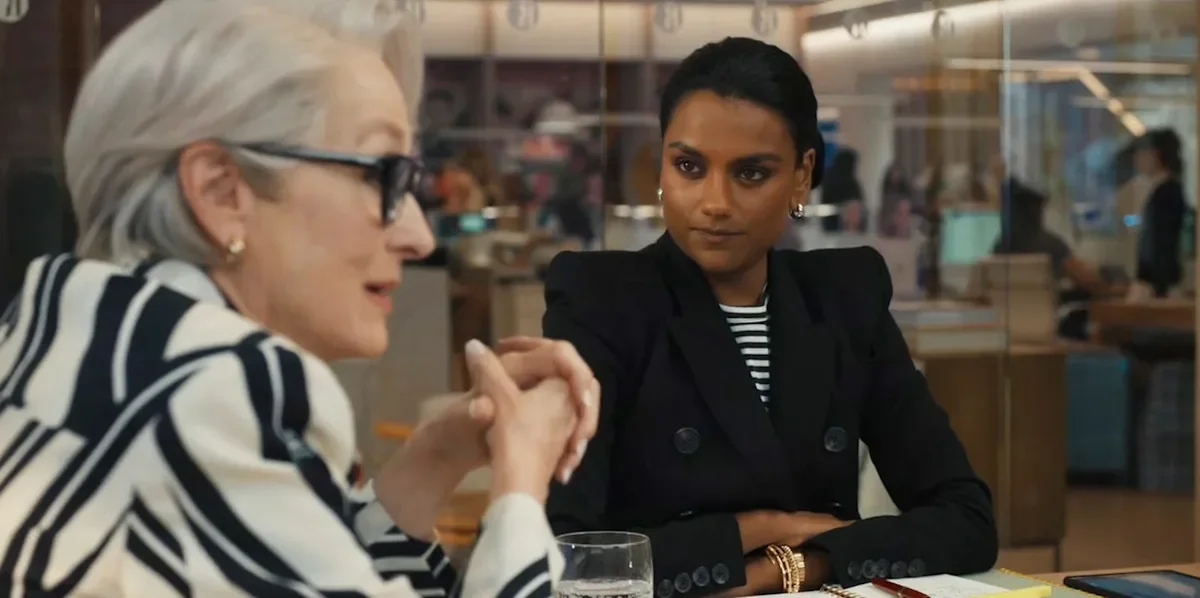
Meryl Streep and Simone Ashley in Devil Wears Prada 2. Photo: 20th Century Studios.
By that measure, South Asian actors are still being asked to prove themselves again and again. Even the Oscars, Hollywood’s most self-important benchmark, tell a stark story. Only four actors of South Asian descent have ever received acting nominations: Merle Oberon in 1936 for The Dark Angel, Ben Kingsley for Gandhi in 1983, Patel for Lion in 2017, and Ahmed for Sound of Metal in 2021. Only Kingsley, who is half English and half Indian, has won for acting. Often billed as ethnically ambiguous, he has played Iranian, Egyptian, Jewish, German and many other types of characters, which — I hate to say — likely adds to his Western palatability. Meanwhile, Oberon, who was part English and part Sri Lankan, masqueraded as an entirely white woman in order to bypass the racist studio codes and immigration laws of the 1920s and 1930s.
It's all a measure of who Hollywood imagines as transformative and bankable, despite what the numbers say. According to UCLA’s 2026 Hollywood Diversity Report, film casts that were 41 to 50 per cent BIPOC had the highest median global and domestic box office receipts and the highest opening weekend rank on average.
“Representation asks: Are we visible? Power asks: Who gets to stay? Who gets to grow? Who gets the second chance after a bad review, the franchise after an underperformer, the awards campaign, the development deal, the assumption of bankability?”
This is not to say that every South Asian casting choice has to be permanent, but that viewers have learned to recognize the difference between change and disposability. We know what it looks like when characters of colour are brought in to enrich a world, only to be written out before the world is asked to change around them. And we know what it looks like when South Asian actors are told to just be grateful for the invitation. Frankly, many of us have felt it in our professional lives.
What’s most striking to me is that the most exciting South Asian work of the last decade has come from artists who refused that bargain. Kaling made her own messy romantic lead, Ahmed made his own anxious, politically-loaded star vehicle, Patel built his own action hero.

Asif Ali, Poorna Jagannathan and Saagar Shaikh in Deli Boys season 2. Photo: Hulu.
But that’s also exhausting, and not something everyone can afford to pull off. After all, it isn’t easy finding investors. Deli Boys, for example, is produced under Disney’s Onyx Collective, a programming initiative that helps produce projects from creators of colour and other underrepresented groups. Deli Boys is only one of four of its comedy series that has yet to be cancelled.
Ultimately, whatever the industry, diverse folks shouldn’t have to engineer their own permanence or complexity. Authorship is powerful, but it should be an opportunity, not a survival tactic.