Scarborough’s Coach Kuya Naredo Believes the Game is Bigger than the Court
For more than 25 years, he has used basketball as a bridge for mentorship, faith and leadership, raising generations of young people in Scarborough and beyond.
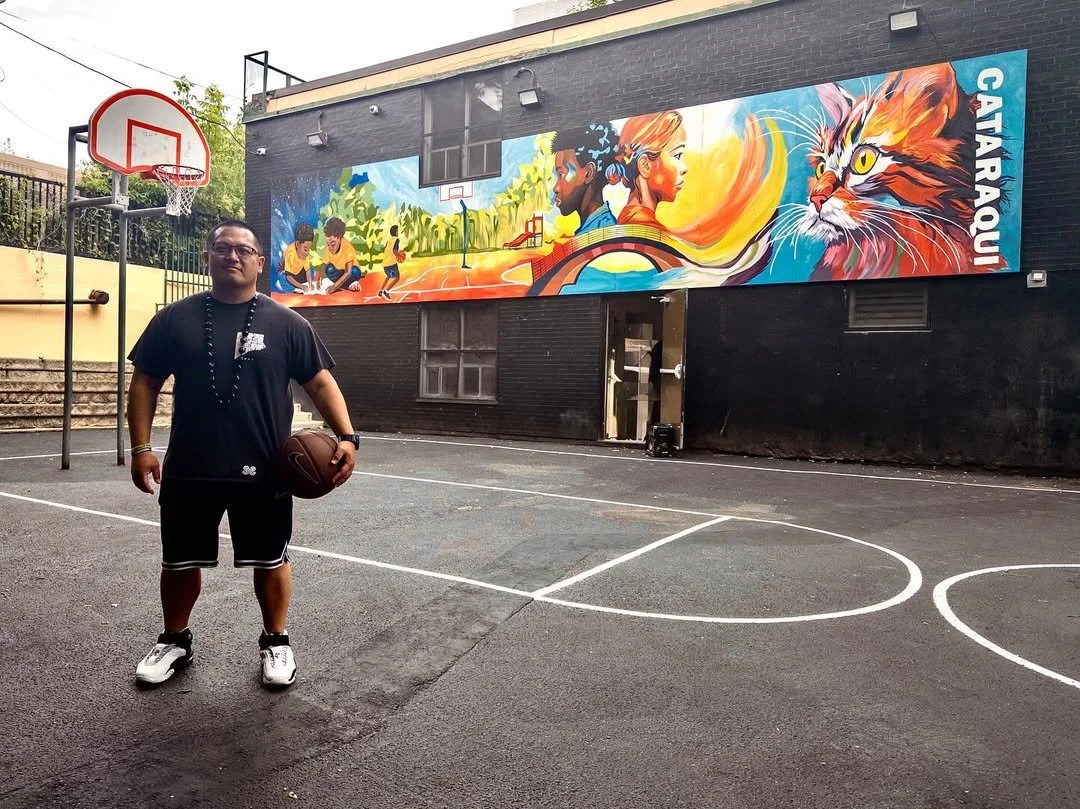
Coach “Kuya” Julius Vincent Naredo. Photo: Instagram/@kuyanaredo.
“Kuya” Julius Vincent Naredo’s path to the basketball court was a long and unexpected one. He was born in Saudi Arabia during the Gulf War, to a Filipino family practicing Christianity in secret. Worship happened underground. Bibles were smuggled in. Baptisms took place in bathtubs. Church gatherings were disguised as beach parties. When religious authorities discovered their house church, Naredo remembers his father being taken away.
“Faith wasn’t theoretical; it involved real, personal risk,” remembers Naredo. Even as he and his family made friends with locals and found neighbourhood support, challenges loomed. He adds, “We shared meals and supported one another, learning to walk courageously and faithfully together. Even with this support, living out our faith remained challenging, and our family had to find creative ways to practice courage and devotion. These experiences shaped my understanding of courage and community.”
They also taught him something he still believes today: when systems fail, people become the safety net. After leaving Saudi Arabia, his family passed through Los Angeles in the aftermath of the L.A. riots before eventually settling in Scarborough’s Toronto Community Housing communities. There, too, he didn’t exactly fit right in.
“The persecution looked different, but the pain was real,” he says. “I was bullied, ganged up on, and targeted because of my skin colour and place of birth. Those experiences taught me how to be brave. They inspired me to be deeply relational, breaking down barriers and building bridges to create community, especially a community of faith.”
Coaching entered Naredo’s life before he ever set out to become one. As a kid, he found basketball through a weekend house league run by Athletes in Action, where he met mentors who saw leadership potential in him long before he did. Eventually, he began volunteering as a coach to younger kids in his neighbourhood. Over time, and through years of mentorship, Kuya became a sports camp director, overseeing basketball, volleyball and soccer programs that ran year-round in partnership with local churches and community organizations. That’s when it clicked for him, he says: “Coaching wasn’t just about skills and drills, it was holistic. I realized sport was a bridge, one that could carry purpose, identity and belief, helping young people live lives of purpose that are greater than the game.”
“I was bullied, ganged up on, and targeted because of my skin colour and place of birth. Those experiences taught me how to be brave. They inspired me to be deeply relational, breaking down barriers and building bridges to create community, especially a community of faith.”
The goal was never just better players, but better people — young leaders who might go on to coach and mentor others in turn. Today, more than 25 years later, Naredo has mentored hundreds of youth across various Toronto neighbourhoods through organizations including UrbanPromise Toronto, Asian Roots Collective (formerly CCYAA), and Athletes in Action. His coaching philosophy blends high-level athletic development with character formation and faith-based mentorship, rooted in the belief that a young person’s worth is far greater than the game they play.
That belief also shapes how Naredo speaks about communities like Scarborough and Jane and Finch, which are often framed in deficit. “What gets missed is transformation,” he says. “I’ve seen roses grow from concrete, which represents resilience, hope and beauty emerging from hardship…the rose represents a person overcoming a harsh environment.”

Photo: Courtesy Kuya Naredo.
The issue, in his view, isn’t a lack of potential, but a lack of opportunity. The proof is in the people Naredo has coached, he says. Many have become the first in their families to graduate, while others now work in healthcare, education, emergency services, mental health, business, the list goes on. Some are now parents who have even enrolled their own children in Naredo’s programs. Many are coaches themselves, giving back to the same neighbourhoods that once raised them.
“The greatest reward isn’t seeing my own fruit,” says Naredo, who loves to wax poetic, “it’s seeing the fruit of others grow long after I’ve stepped back into the bushes like Homer Simpson. It is deeply humbling and gives us all a lot of hope to keep going.”
That long view helps explain why mentorship pipelines (or coaches building coaches) matter so much to him. Rather than viewing young athletes as projects or tools for trophies, it’s important to invest in authenticity, Naredo says. Particularly in NIAs (Neighbourhood Improvement Areas, several of which can be found in Scarborough), where he has spent much of his time, and has noticed how youth can easily spot performative activism and virtual signaling.
“When young people see leaders who came from the same environment, it liberates them to believe they can do the same,” he says. “Pipelines create continuity and possibilities. They create trust, because there’s a point of reference.”
That alone, and being a Filipino community leader in Toronto, means Naredo is acutely aware of the visibility and responsibility that comes with leadership. Too often, he says, Filipino leaders are overlooked. His goal isn’t recognition, but impact. “Leadership means refusing the status quo,” he says, “and raising standards so others can rise up, too.” He hopes that visibility within the Filipino community can extend outward to other communities throughout the city.
It's a sentiment Naredo has been recognized for with multiple honours, including the Ontario Coaching Excellence Award and community leadership recognitions from the City of Toronto and UrbanPromise Toronto. But, he says, “These awards are mirrors, not spotlights.” To him, they reflect back the young people who trusted the process.
Asked about legacy, Naredo doesn’t hesitate. He hopes to be remembered for his faith and leadership, and how he’s helped create space for others to grow. He explains, “If the work continues without my name attached to it, that’s success.”