
What Time and Oceans Can’t Erase: Reconnecting with Culture and Family in Kuching
Visiting made me consider what cultural continuity looks like in different places, and how easily parts of it can fade through migration, assimilation and time.
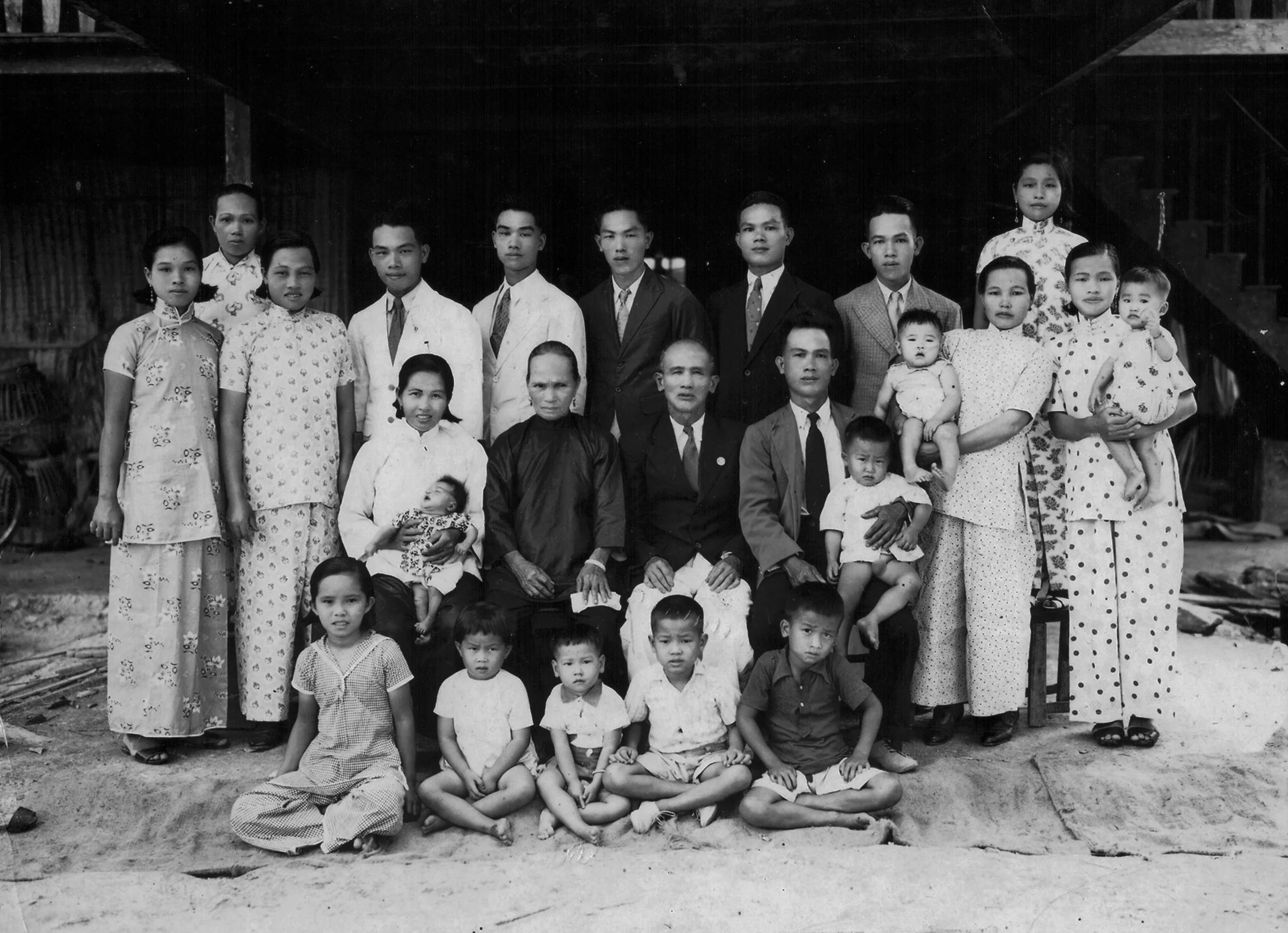
The writer’s maternal grandfather’s family in Kuching, Malaysia, circa 1900. (Photo: Courtesy Kimberly Lyn)
My family history is shaped by movement.
My maternal grandfather was born in 1906 in Kuching, the capital in Sarawak, Malaysia. As a young man, he left to join an uncle in Jamaica in search of work and opportunity. There, he built a life, raised a family and became part of the Chinese Jamaican community. Over time, distance and limited communication changed what remained of the family he left behind. Kuching became part of our history, but not our present.
I grew up hearing about my grandfather through my mother and aunts. Their memories often centred on his Chinese upbringing. He was educated in China, a scholar with a love for poetry and music. My aunts remember him playing a wooden string instrument with care and visiting the Chinese temple to pray, while my mom recalled family outings to the Chinese Benevolent Society to watch Chinese opera performances. Those stories stayed with me, even as our connection to our extended family faded.
In the 1970s, my parents migrated to Canada, adding another chapter to our family’s story. Like many children of immigrants, I grew up with a partial understanding of my cultural identity. We celebrated Lunar New Year and stayed connected through food, family obligations, and traditions, but language did not carry through. Hakka and Cantonese were not passed down, and I often felt that absence. At times, it made me feel disconnected from a culture I wanted to understand more deeply.
In 2009, an unexpected message changed things. A relative from Kuching found us by searching for our family using the Whitepages in the U.S. and contacted my uncle. After decades of silence, we reconnected. What began with emails and Skype calls grew into family reunions in Toronto and the U.S. Each meeting over the years filled in gaps; people who existed in stories of the past turned into real relationships. Observing my mother, aunts and uncles interacting with members of our Kuching family with curiosity, joy and wonder was like watching the missing pieces of a puzzle fall into place, making the picture whole after decades of uncertainty.
But I still wanted to see Kuching for myself.
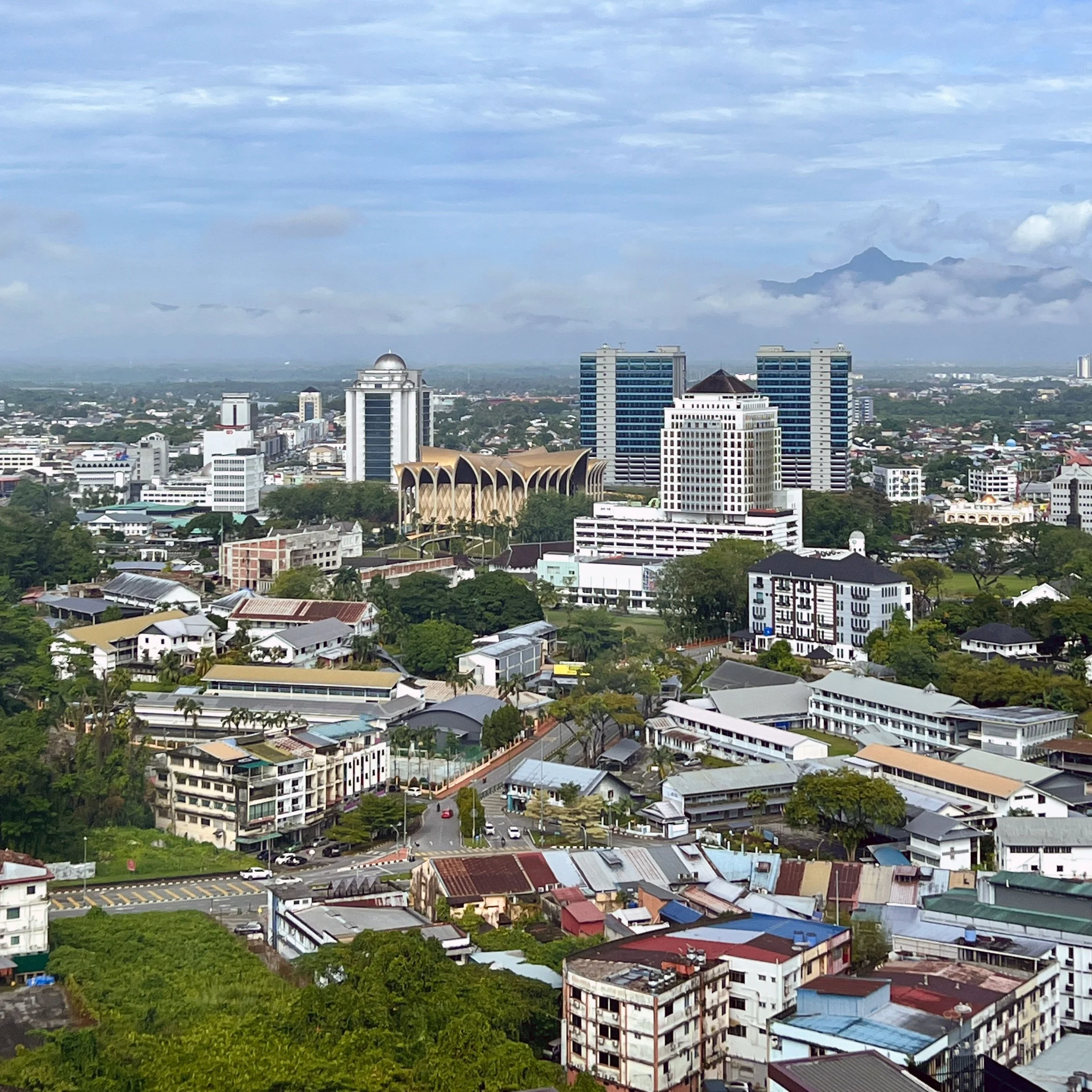
Aerial city view of Kuching, Malaysia. (Photo: Kimberly Lyn)
In March 2025, I made the trip. After more than 28 hours of travel and two stopovers, I arrived in a city that had long existed only in family stories. My uncles, Eddie and Bakkee, greeted me at the airport and took me to dinner. It was a simple beginning, but it meant a lot. I was meeting family not through a screen, but in person and in the place where my grandfather’s life began.
The next day, I explored Kuching’s city centre. The name “Kuching” means “cat” in Malay, and the city embraces it with cat statues placed throughout public spaces. Along the Sarawak River, I visited the Chinese History Museum, which documents the experiences of Chinese communities in the region. Inside, exhibits highlight different dialect groups, including Hakka, and display everyday objects, tools, instruments, and cultural items.
What stood out was the way the museum presented this history. It didn’t flatten the community into familiar stereotypes. It showed migration, labour, adaptation, and perseverance. It showed how Chinese settlers built lives in Sarawak while maintaining cultural practices over time. For me, it offered a clearer understanding of the environment my grandfather came from, and a sense of pride in the resilience of the community.
A short walk later brought me to Tua Pek Kong Temple, one of the oldest Chinese temples in Kuching. Its bright red exterior, lanterns and the smell of incense made it hard to miss. Inside, people moved through their daily routines of worship, lighting incense, making food offerings, and burning joss paper.
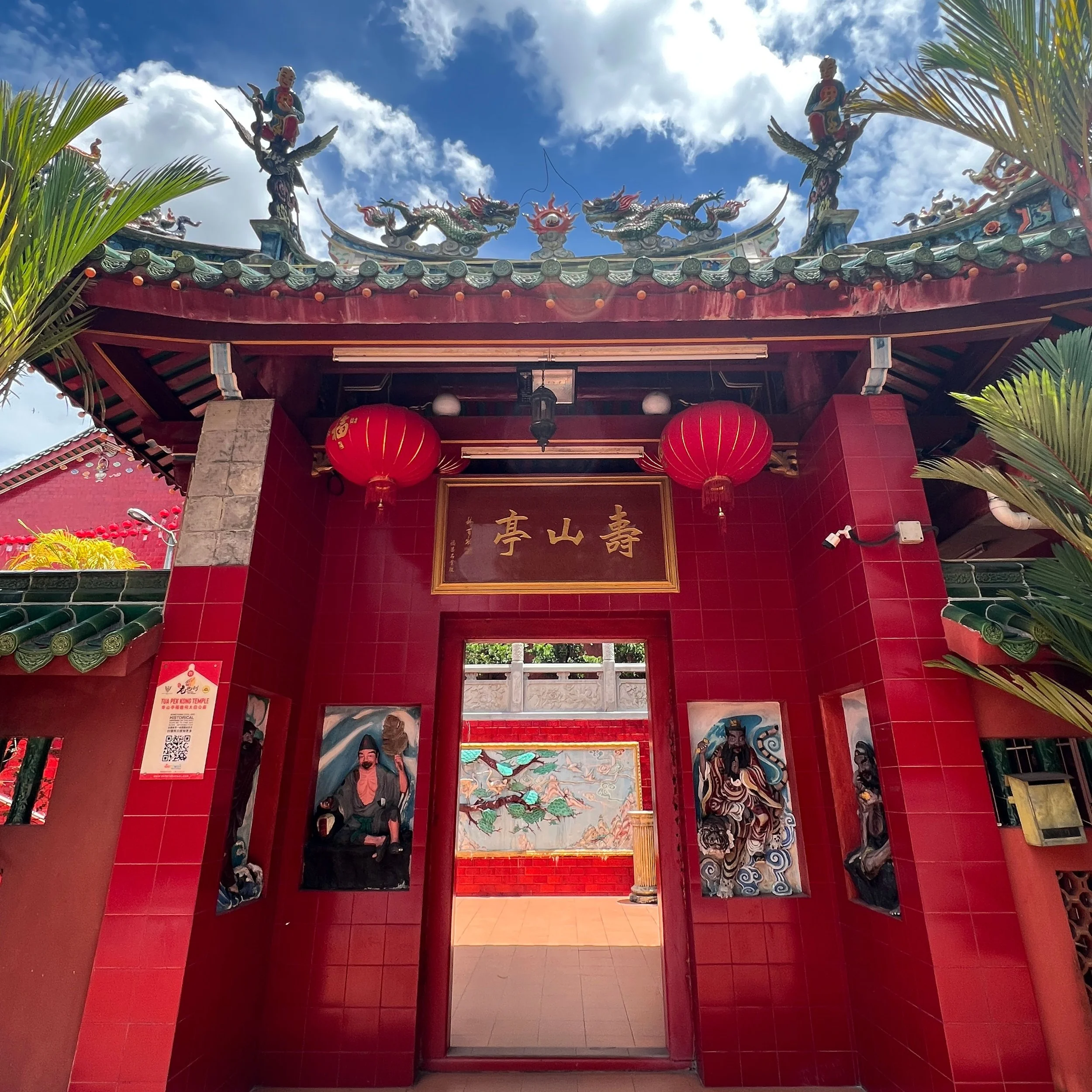
Entrance to Tua Pek Kong Temple in Kuching. (Photo: Kimberly Lyn)
Being there felt peaceful and different from the cultural experiences I was used to in Toronto. Worship in the temple wasn’t reserved for special occasions or community events. It was part of daily life. Watching people practise their traditions so openly made me think about what cultural continuity looks like in different places, and how easily parts of it can fade through migration, assimilation and time.
That afternoon, Uncle Bakkee took me to the Hakka cemetery (as pictured) where my great-grandparents are buried. This visit had been years in the making and I often wondered about them, about the life they lived in Kuching, and about the son, my grandfather, who left for Jamaica.
Walking through the cemetery, I was struck by the traditional Chinese graves that sit along the hillside, positioned according to feng shui principles. My great-grandparents’ resting place is on a hill facing east, a placement understood to bring protection and good fortune to future descendants. Their photos are embedded in the tombstones, alongside inscriptions marking their lives and the family they left behind.
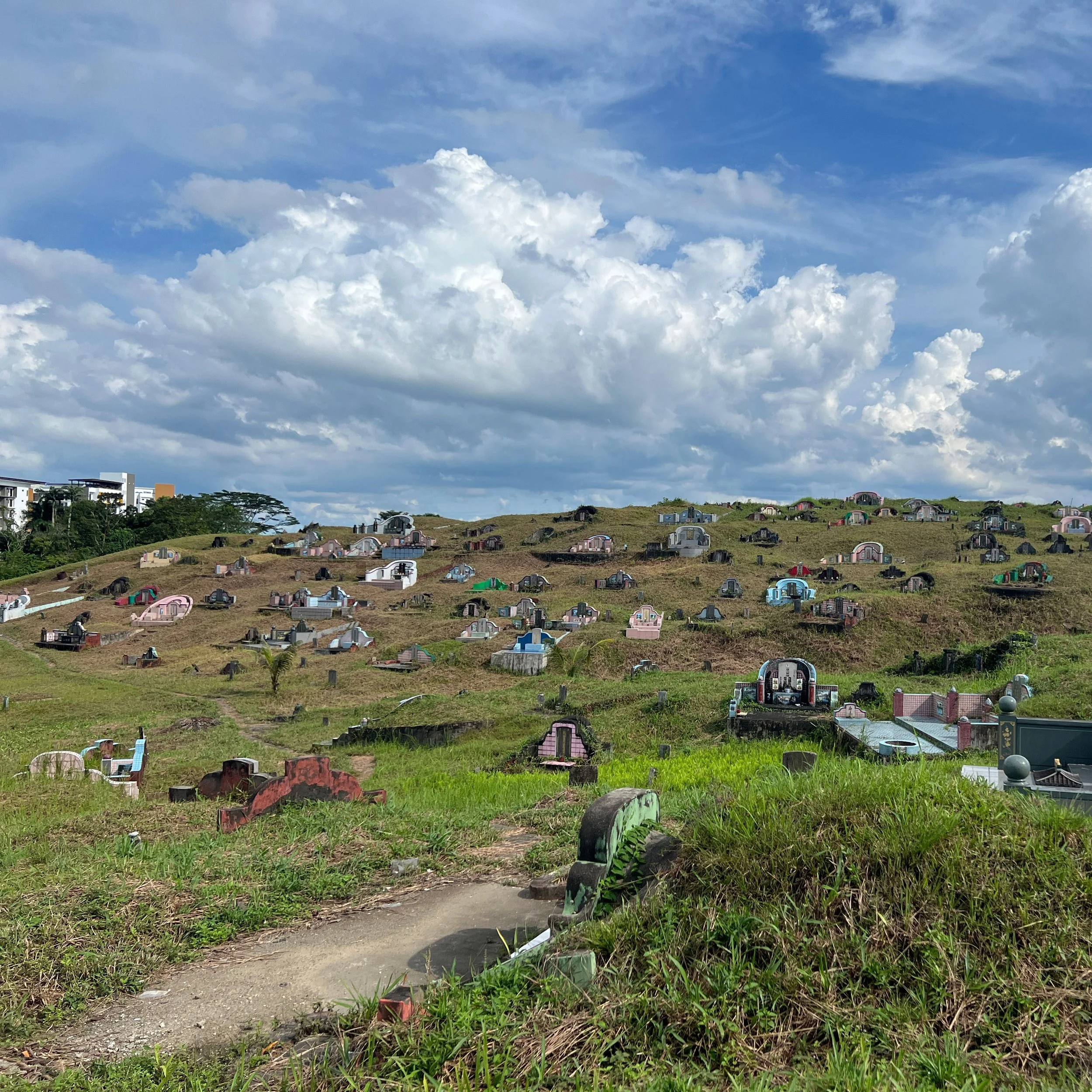
Chinese cemetery in Kuching, Malaysia. (Photo: Kimberly Lyn)
From Uncle Bakkee, I learned that my great-grandfather worked as a rattan basket weaver, while my great-grandmother farmed vegetables and sold them at the market. These details made my great-grandparents feel less like distant names in a family history, but people with character and depth who had routines, responsibilities, skills, and hopes.
I laid flowers at their graves and took a moment to reflect and pay my respects. I had expected the visit to feel sad and emotional, given how disconnected my family and I had been from this part of our history. Instead, under a sunny sky and a warm, gentle breeze, I felt calm and grateful. I had finally made it there and I hope my great-grandparents know that they haven’t been forgotten, despite the time and distance between us.
The rest of my time in Kuching centred on family gatherings, most of them built around food. I moved between family homes and hawker stalls, sharing meals that felt both familiar and new. Dim sum, char siu, and other dishes I had grown up with appeared often, reminding me how food can hold cultural memory when language does not.
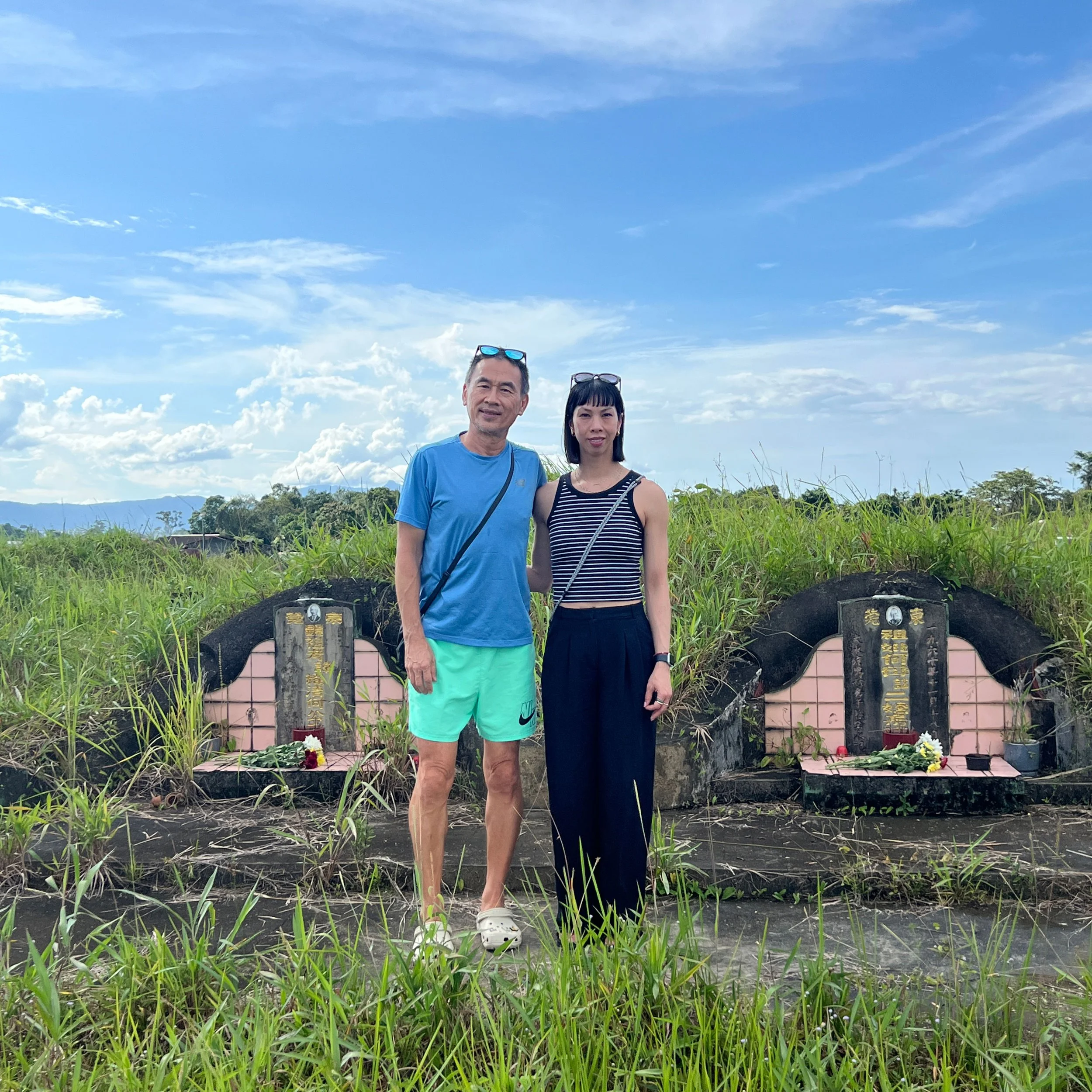
The writer with her Uncle Bakee at her maternal great-grandparents’ cemetery. (Photo: Kimberly Lyn)
One of the larger family gatherings took place in a Chinese restaurant, where 13 relatives sat around a banquet table. A large lazy Susan held dish after dish, and the conversation moved easily despite differences in language and upbringing. My aunts and cousins asked about my life in Canada; we talked about my sisters and relatives who had passed, most recently, my mother.
What stayed with me most was how naturally I was welcomed. Although I grew up far away and didn’t speak Hakka or Cantonese, no one treated me as an outsider. There was no judgment, only curiosity and warmth. I was family and they accepted me. That acceptance challenged the belief I carried for years that cultural belonging depended heavily on language.
Throughout the trip, Uncle Bakkee helped me navigate both the city and our family connections. He organized gatherings, brought me from place to place, and made sure I met as many relatives as possible. His care turned what could have felt overwhelming into something meaningful.
The trip gave me a deeper understanding of my family’s history, but it also changed how I think about identity. Migration created distance in our story. It introduced gaps in language, memory, and connection, but it didn’t erase the past.
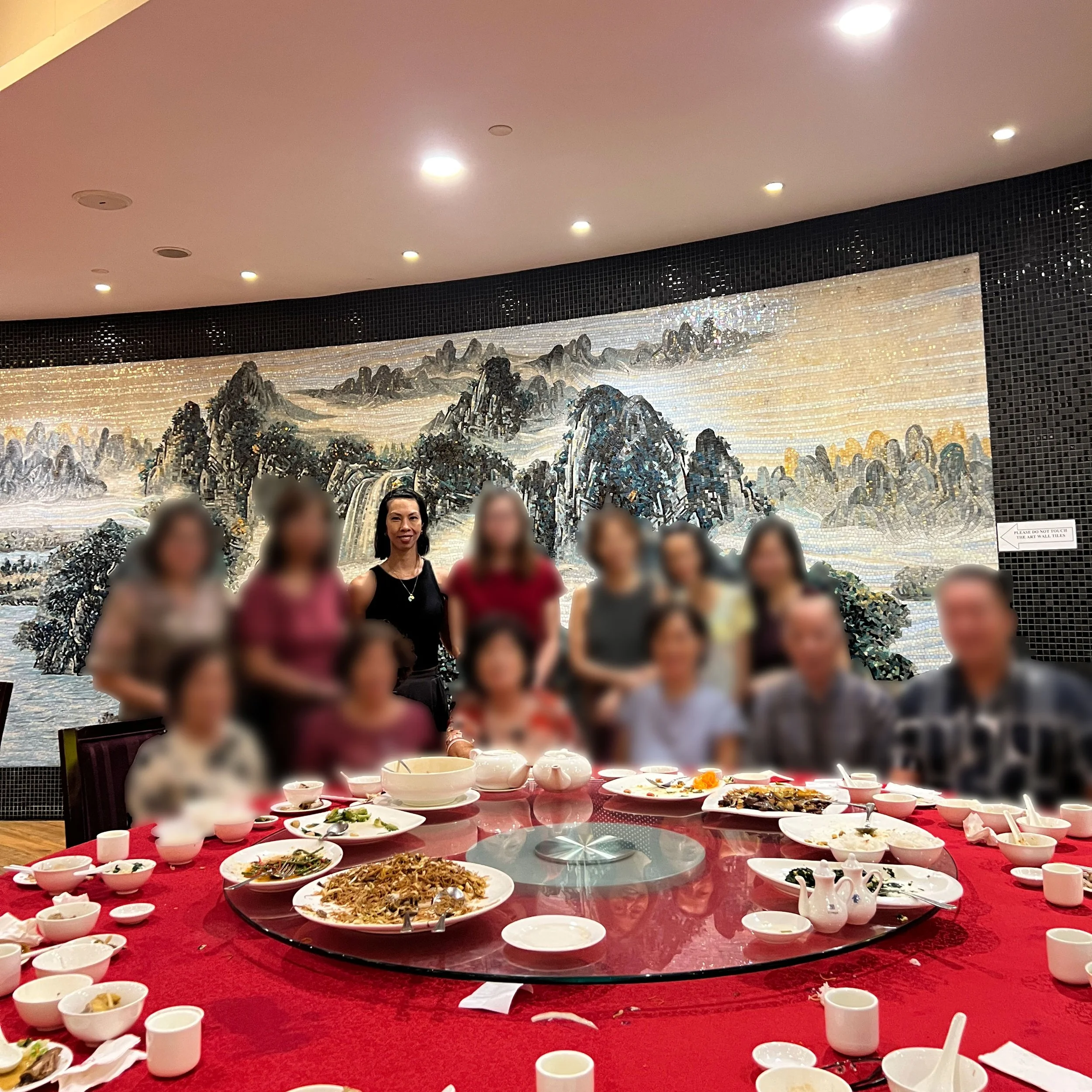
The writer having a family dinner at Boulevard Restaurant in Kuching. (Photo: Kimberly Lyn)
In Kuching, I saw how those connections can be rebuilt. They may look different after generations apart, shaped by time, geography, and circumstance, but they remain. Meeting my relatives, visiting my great-grandparents’ resting place and experiencing the city my grandfather once knew helped me reconnect with a part of myself that felt missing.
Returning to my maternal family’s place of origin didn't answer every question I have about identity, but it gave me clarity. Belonging is not fixed to one location, one experience, or one language. It can stretch across generations and oceans, held together by memory, effort, and the willingness to reach back.
Time and oceans created distance in my family’s story, but they did not erase it.