Toronto Multi-Talent Taha Arshad is Chronically Online, and Thank God for That
The Canadian Screen Award nominee is turning internet comedy into something bigger, all while staying true to his identity and his politics.
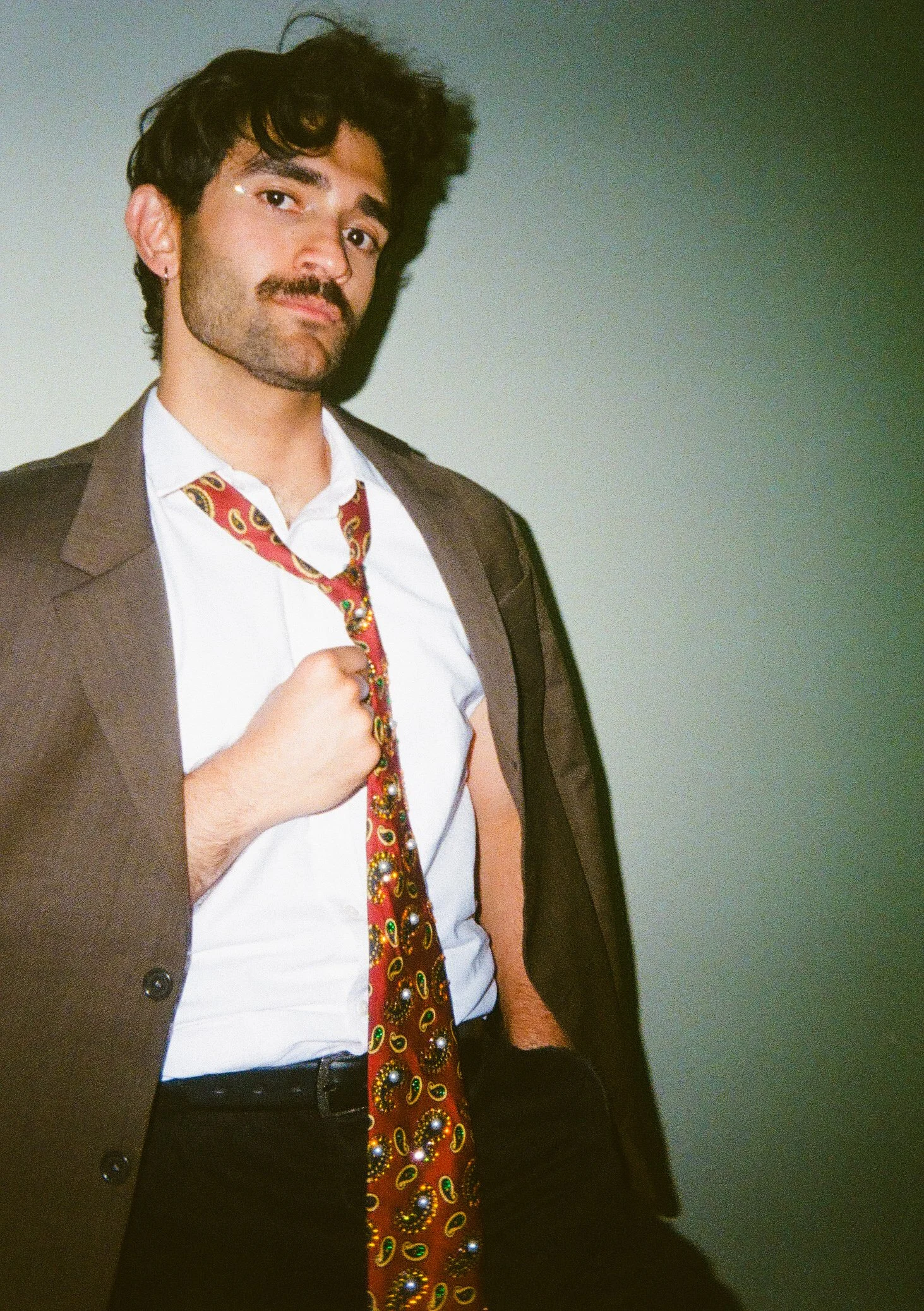
(Photo: Hana Shafi)
When Taha Arshad first started making videos, he wasn’t necessarily thinking about building a career. He wasn’t plotting an empire, mapping out a brand strategy or imagining himself as one of the rare visibly Pakistani personalities being recognized by the Canadian screen industry. At first, it was simpler than that: he just thought he might be funny.
Arshad had been performing long before he became a familiar face online. As a pre-teen, he was busy editing and making videos, including a YouTube vlog series and anime music videos. Soon after, at 15, he started theatre and continued through high school, university and beyond. Needless to say, an instinct for drama was there early on, even if the platform hadn’t quite arrived yet.
Then, in 2021, he broke up with his boyfriend who he’d been helping to make comedy videos for TikTok. “But he was unbearably unfunny, which was a byproduct of him being out of touch with reality, you know?,” explains Arshad. “And so, I remember thinking, ‘I wonder if I could do this?’” For a few weeks, he posted without any grand plan. His approach, to this day, includes skits and videos that are either “just silly and stupid,” or that begin with a real-life experience and become a way to make people laugh while also nudging them to notice a bigger message. Then, one day, a video took off.
“After that, I was like, ‘Okay, people think I’m funny, that I’m interesting. What can you do with this?’” he says, his voice and face as expressive and warm as it is on your TikTok feed. “I didn’t start thinking about long-term plans and leveraging at all. I was like, ‘Oh, this is really cool and fun. Let’s see what happens.’”
@tahalikesyou this is why youngest siblings are the smartest i am not taking any questions at this time
♬ original sound - TAHA
What happened was that Arshad became one of the country’s most engaging internet personalities, building an audience through high-energy skits that are sharp, silly and specific (particularly anything culturally-tinged). His videos often mine the absurdities of everyday life, but they also carry something rarer: a voice that is unmistakably his own. As a queer South Asian creator, Arshad has become visible in a space where visibility still comes with a cost.
This year, that work earned him a Canadian Screen Award nomination for Creator of the Year, a new category recognizing digital creators whose original work has made an impact online. For Arshad, the nomination is both joyful and complicated, which, fittingly, is also how he tends to process much of his career.
“There is a pressure put on us that white [creators] will never, ever feel or understand,” he says. “Anytime something political happens, we have to post about it. … If we don’t immediately post, it means we are fake people, race traitors, we are ignorant and don’t care.”
That pressure is compounded by the fact that he is not just a creator, but a visible queer, brown one. He is aware that audiences can project entire communities onto one person, especially when that person is so accessible and on the daily. He is also aware that being beloved by some does not protect him from being scrutinized by others.
“There is a pressure put on us that white [creators] will never, ever feel or understand. Anytime something political happens, we have to post about it. … If we don’t immediately post, it means we are fake people, race traitors, we are ignorant and don’t care.”
“If I leave a bad taste in someone’s mouth, they can say, ‘See, I knew it. Gay people are annoying,’” he says. “I have to be particular about my way of interacting with everyone. I try to [incorporate] a mix of content that is relevant to my identity and content that is general, but I do think that specificity for me is important.”
Still, Arshad is not interested in sanding himself down. After all, his work is funny because it is so specific; he makes Pakistani folks, queer folks and so many others feel seen, and without mocking his heritage (unlike some other creators and comedians, ahem). And that is because he refuses the old bargain that marginalized performers are often pressured to make: be palatable, be vague, don’t be political, be grateful just to be seen. His bio alone — “happy gay immigrant” — speaks volumes.
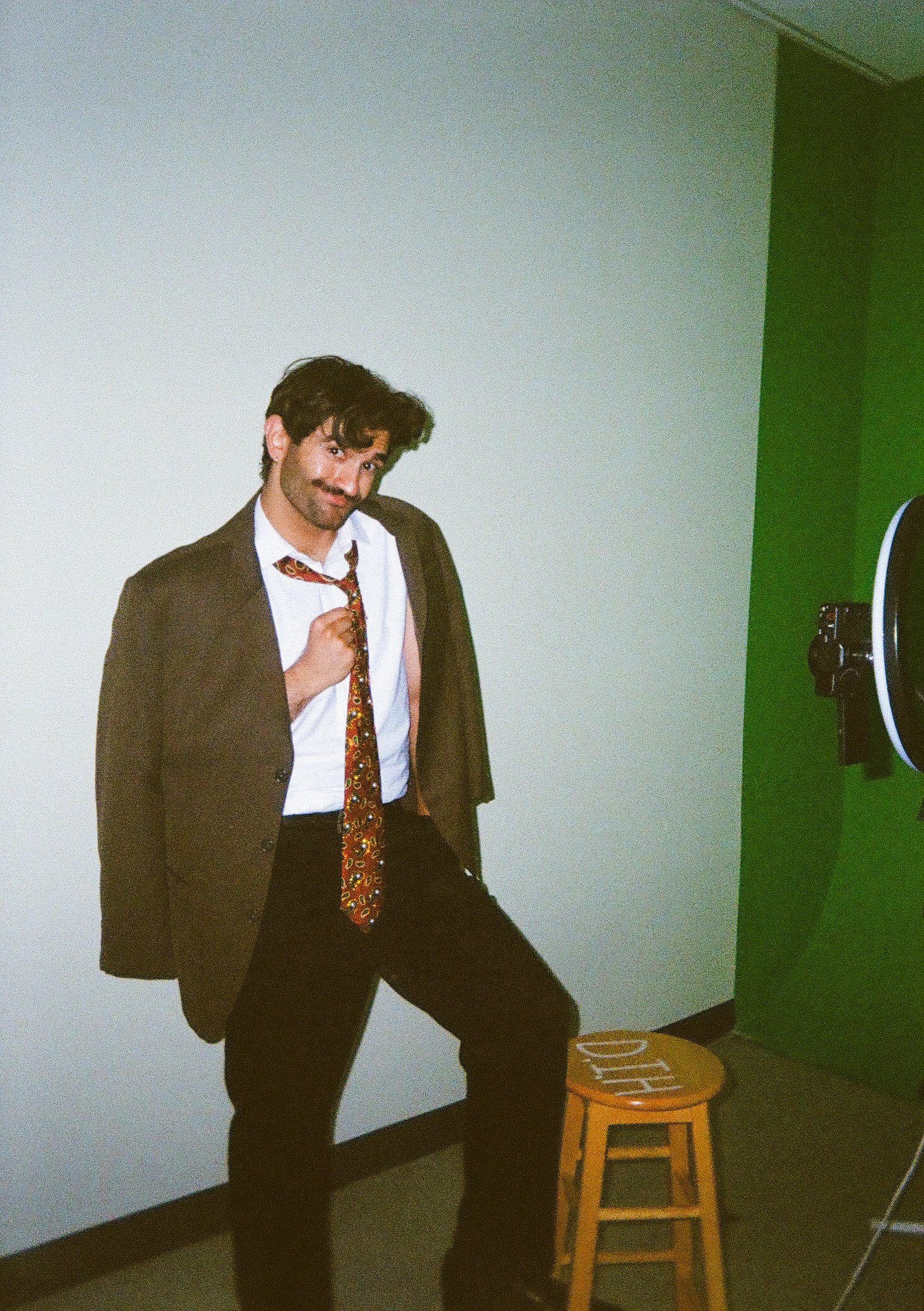
(Photo: Hana Shafi)
He says he often imagines someone finding his videos and, at first, thinking he is funny, then realizing he is South Asian and feeling proud of it. Arshad says, hopeful, “This may be a drop in the pool that helps people feel more normal.” (This Pakistani queer writer can confirm it very much does.)
Here’s his inner dialogue when conceptualizing a skit or video: “Is there a way I can call out something interesting and systemic in a way that makes people laugh and then go, wait, let me think about that?”
As his platform has grown, so has the business around it. Arshad has been creating content full-time since the early 2024. He has a management team that handles logistics, negotiations and emails, but he remains closely involved. Perhaps surprisingly, before content became his career, Arshad worked in clinical research, where his job was data management. That background still shows up in the way he handles his work today.
Today, Arshad’s ambitions extend beyond the feed. He’s working toward television, film, production, writing and acting — a transition he sees as a natural continuation of the skills he he’s been busy building since he was a probably too-online kid. He recently wrote, produced and starred in a web series called Stay With Me, which he hopes could mark the beginning of a new career, one he models on those of Quinta Brunson, Issa Rae and Mindy Kaling, all creators who made their own work with their distinctive voices to build their paths into television.
“If I want to be like Issa and Quinta, I’m going to produce this myself,” he says. “If I want to take up space like them, I want to know how every single part of the machine works.”
That impulse is practical, but also necessary. Arshad is aware of how narrow the entertainment industry’s imagination can still be when it comes to South Asian performers.
“If there’s a South Asian-specific role I audition for, I almost know I won’t get it, because I won’t fit into their vision for what they’re looking for,” he says.
It is not, he stresses, a “woe is me” mindset. He understands privilege, but he also sees a system (in North America and “back home”) that still treats South Asian identity as monolithic.
“People don’t understand what to do with me, but they don’t have to,” he says. “They’re writing their own stories. Let me see if I can write my own story and alter the boundaries of what being South Asian can look like.”
That is partly why winning a Canadian Screen Award nomination earlier this year matters so much. On paper, it’s industry recognition. But for Arshad, the emotional reality of it has been messier. He admits he initially had mixed feelings, in part because he applied for the award himself, something his friends reminded him is simply how awards work. But the nomination also forced him to confront the way racialized success is often diminished.
After he was nominated, Arshad says a white industry friend suggested he had a good shot because he’s “diverse,” as if there might be a quota to fill. Later, he implied that if Arshad won, it would only be because all of the other nominees were white (they were not). He also informed him that he should keep his dreams “more realistic.” Arshad has not, thankfully, spoken to him since.
“People don’t understand what to do with me, but they don’t have to. They’re writing their own stories. Let me see if I can write my own story and alter the boundaries of what being South Asian can look like.””
“If I internalize what this person is saying, I’m never allowed to celebrate anything,” he says. “They fundamentally don’t respect me.”
The experience was painful, but clarifying. It reminded Arshad that the work he has done — including the opportunities he’s given up by being outspoken about his political beliefs — is part of why people connect with him. Even getting a DM that read “Holy shit, I can't believe an anti-zionist brown person is nominated” felt like a milestone.
“I hold that very close to my heart, to be able to be funny, but also have a spine,” he says. “That’s so crucial to who I am in every way.” Plus, he joked, though it’s true, “If you hire a brown person, you're getting more labour for your dollar and better quality. Are you kidding me?!”
It’s just one of many experiences that has changed how he views success. When he first started making content, success meant being able to do it full-time. Then it meant making enough money to support himself and help his mother financially. Now, the dream has widened. He remembers working in research and fantasizing about how, in another life, maybe he could do what Brunson or Rae were doing. “Holy shit,” he says. “I’ve been granted that other life.”
Even his mom and dad are big fans. Like most Asian parents might react, when Arshad first told them he didn’t want to pursue a master’s degree and instead wanted to quit his job to create online content full-time, they were so not happy. He says, with a laugh, “Huge fights! They were furious.”
Now, they’re not only supportive, but proud. They even love telling their friends what he’s up to and how well he’s doing. It’s a familiar arc for many children of immigrants who pursue creative work: first fear, then resistance, then pride once the risk begins to look like stability (and is something they can understand).
“If you are going to base whether or not you follow your dreams on the support of your [parents], just don’t think about that,” he says. “They will be happy for you if you’re successful, and if you fail, well look, we’re all gonna die. You tried! … But really, all they want is for you to be financially stable, their intentions are in the right place.”
For all his humour, Arshad speaks often in terms of responsibility: to his community, to his work, to the people watching, and to the future he is trying to build. He wants to make people laugh, he wants to write, he wants to act, he wants to create work that feels true. In doing so, he’s making space for a version of representation that doesn’t ask for permission first. As he puts it, “I’m actually allowed to dream big.”