
Why Ana Serrano Believes the Future of Tech Needs to Include Artists
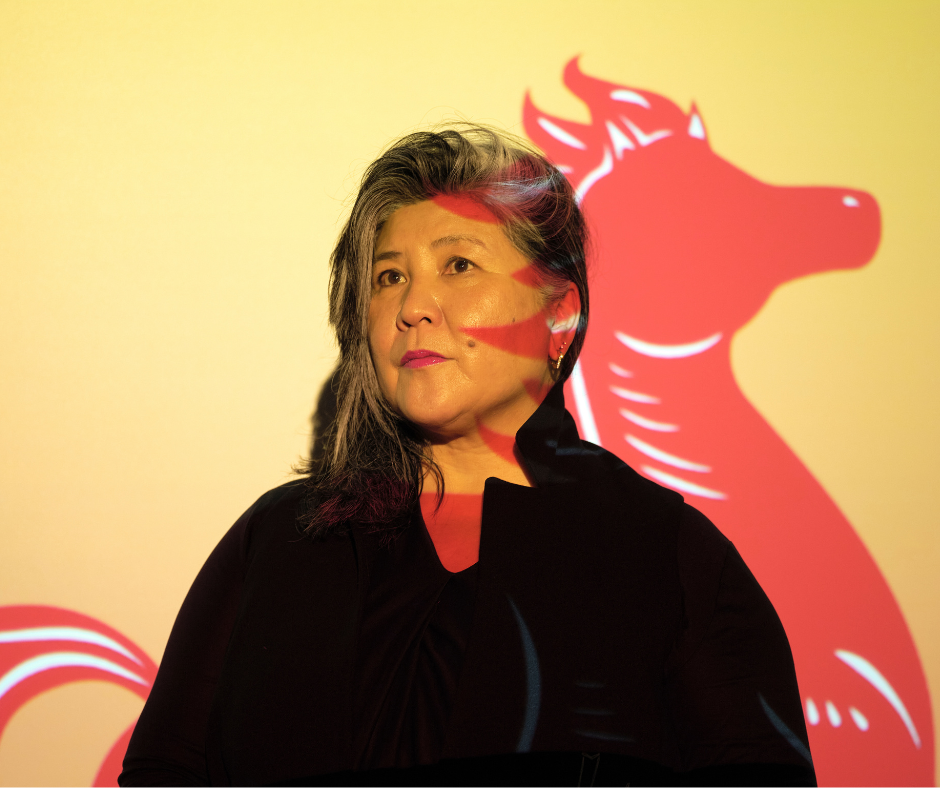
Ana Serrano is the receipient of the 2026 Fire Horse Award. (Photo: Mike Tjioe)
Ana Serrano’s career began at the same time that the internet started to take over culture.
Serrano was born in the Philippines and moved to Canada at the age of 10. During her time in university, when she attended McGill University in Montreal, Serrano had begun to skip classes and was more interested in exploring the city. Unfocused on academics, she decided to take a gap year and travel through Southeast Asia. It was the first time she’d been back to the Philippines since immigrating to Canada. The trip made Serrano “get her shit together and work hard,” she explains, adding that she started to get serious about school and her career.
At the time, Serrano imagined that she would go into publishing because she studied English lit. But her father put a quick stop to that. “He just said, ‘No, that’s not for you. You should look into this thing called the Internet,’” Serrano says.
Eventually, inspired by her father, she completed a certificate program at the University of Toronto that taught her about multimedia tools. At the time, she thought of herself as a future maker. Again her father intervened: “He said, ‘I don’t think you should be the maker, I think you should be the person who decides what to make and what should be made,’” she recalls. “I think he felt that my competencies extended beyond the making part—I was good at organizing, financing and other things like that.”
That fatherly advice would end up shaping Serrano’s entire career as a producer, innovator and educator. Now, Serrano is the president and vice-chancellor of OCAD University and is this year’s recipient of Reel Asian’s Fire Horse Award in recognition of the way her works bridge technology, art and cultural leadership.
“Some people build careers — Ana builds ecosystems,” reads a press release from the Reel Asian Film Festival. “For more than two decades she has expanded the boundaries of storytelling, technology, and leadership—creating opportunities for artists, students, cultural entrepreneurs, and innovators while reimagining what the future of media could be.”
In 1997, Serrano founded the Canadian Film Centre (CFC) Media Lab, the CFC’s innovation hub. At the time, she was just 27 years old and was interested in how the internet and other digital tools could be used to democratize storytelling . “For the first time, the tools for production were the same as the tools for distribution, so there was a real opportunity to expand who gets to tell a story and what kinds of stories they get to tell and how,” she says. It was at the CFC that Serrano made a number of projects, including Late Fragment, North America’s first interactive feature film.
That drive and dedication to boosting other creators and ensuring that artists have the space to create is what led her to OCAD, where she began as a professor and is now the university’s first BIPOC president and vice-chancellor. While Serrano imagined she’d stay at CFC her whole career, the shift to OCAD “wasn’t that weird,” she says. “I was committed to helping develop talent. To me, [working at OCAD] was just a much bigger scale. Like, I can do it for 5000 students instead of 12.”
But it’s not just about helping creatives get their works made and seen—Serrano is also dedicated to making sure that artists are benefitting from their work. And that means taking companies like Google and Meta to task.
“I realized that the work I’ve done in my life has been in service of these platforms that have taken the lion’s share of all the value created and we don’t benefit.”
“At the start of my career, there was all this possibility of doing something new and democratizing storytelling,” Serrano says. “Meanwhile the infrastructure was slowly being consolidated into a set of monopolies [...] I realized that the work I’ve done in my life has been in service of these platforms that have taken the lion’s share of all the value created and we don’t benefit.”
A lot of the students who went through the Media Lab ended up founding their own companies, Serrano explained. But there was nowhere to get capital to scale. This gave her the spark for IDEABOOST in 2012, Canada’s first digital entertainment accelerator. “My whole career path is really about constantly being curious about the industry I am in and what’s happening and trying to be ahead and creating conditions for people to understand how to take advantage of it,” she says.
Serrano also joined Open Democracy Project to get involved in rehabilitating platforms and critiquing big tech. She also founded Block Sidewalk, which is an anti-Sidewalk Labs coalition. That involvement in tech critique isn’t disengaged from her work as an artist, though—Serrano says that they are intrinsically linked.
“How do I use the platform that I have to create the best possible conditions for creative people to thrive? That’s my job,” she says, adding that digital media ecosystems don’t have a ton of opportunities to make money, which has led to interesting projects existing in the margins rather than at the centre of culture. “That heterogeneous environment of creativity is now really in the margins because all the other stuff that makes money gets amplified.”
Serrano credits her Asian Canadian upbringing as the heart of work. She points to her grandmother, who was the first doctor in Catbalogan in the Philippines and her grandfather who ran the veterans’ memorial hospital in the Philippines after marching in the Bataan Death March. “I grew up with my grandparents who were always creating conditions for their communities to thrive,” she says. “I think it’s in my DNA. The way I work is because I’m Asian Canadian and Filipino.”